Where ideas meet reality

tree-root

I was talking to a fellow founder today about the lessons we have learned. It is always interesting to go back and reflect on lessons learned.

Over the last 18 months, I have learned a whole lot about building a consumer product. The biggest lesson I have learned is this:

There are interesting ideas, and then there is the reality of what people want.

The reality of what people want always wins out. An idea is only good if it touches this reality. If there is a gap between your interesting idea and reality, the idea is a bad idea.

I’ve often found myself lured by the trap of interesting ideas. I don’t know if all entrepreneurs have this problem, but I surely have. I think a big part of it stems from my experience in academia where novelty is rewarded with publications.

In the real world, novelty means almost nothing.

What matters is:

  1. Whether there is a market for your product,
  2. Whether your product satisfies this market,
  3. Whether you can build this product, and
  4. Whether you can get it into the market.

And by market, I mean people. There have to be actual people out there that need your product because it dramatically changes their lives for the better.

P.S. This is post number #68 in a 100 day blogging challenge. See you tomorrow!

Follow me on Twitter @alexshye.

Or, check out my current project Soulmix.

Notes from the PandoMonthly with Jason Calicanis

I’m quickly becoming a fan of the PandoMonthly fireside chat series. I love how the interviews mix useful information with casual conversation. It gives the viewer a good feeling for the personality and past experiences of each interviewee.

(Photo credit: Rebecca Aranda for PandoDaily)

(Photo credit: Rebecca Aranda for PandoDaily)

Last week I watched the PandoMonthly with Jason Calicanis, angel investor and founder of Weblogs (sold to AOL), Mahalo.com, and an upcoming venture at Inside.com. The interview is almost 2.5 hours, and has lots of great nuggets of advice in it.

Here were a few of my favorites (partially in his words and partially in mine).

  • On his past: Many great entrepreneurs have a complex relationship w/ their parents in their past. Jason saw his dad lose his business, and it changed him as a child, giving him a tremendous drive on succeed.
  • Entrepreneurship now: It has never been this easy to start a startup off of the ground, and it has never been easier to get angel funding. Finishing is much harder.
  • Focus on skills: If you can’t get traction, you don’t have your stuff together yet. Focus on building your skills and honing your craft. It has never been easier to et traction, but you have to know what you are doing. It’s not about tricks and tactics. It is about having a true vision, and knowing how to get users that truly believe in it.
  • Talking to investors: Be succinct when talking to investors. When you are at a restaurant, the chef doesn’t tell you everything about making the food. The chef only gives you the food, and lets you enjoy it. Do the same: create a simple and elegant product which solves a real problem. When you get things down, simply show your simple product and make it succinct.
  • Don’t diss unicorns. Entrepreneurs often put down existing big companies. Don’t do it! These companies are unicorns: they are one of the few that have made it big and provided big value to the world. Don’t diss the unicorn — respect them and then go out and find your own.
  • Only person stopping you is yourself. Many people don’t understand this. Don’t worry about everyone else. Shut up, believe in yourself, and get your skill level up.
  • Everyone is optimizing for wasting the user’s time. So many websites are optimizing their headlines and websites for user clicks. This cannot end well. It will result in a public that is diseased and diabetic from their information diet.

In particular, I love the last point and agree with it 100%. I wrote a blog post on how headlines are shitty these days. There has to be a better way to get information to the general public without resorting to these tactics. The current solution cannot be the long term solution.

P.S. This is post number #65 in a 100 day blogging challenge. See you tomorrow!

Follow me on Twitter @alexshye.

Or, check out my current project Soulmix.

Notes on the PandoMonthly with Phil Libin, CEO of Evernote

Lately, I’ve been using my lunch breaks as a chance to catch up on interviews of entrepreneurs and VCs. It is the perfect opportunity to learn while eating. Since interviews can get pretty long, I thought it might be useful to blog on my favorite points from these interviews. I started last week with Albert Wenger’s interview.

A few days ago, I greatly enjoyed the PandoMonthly with Phil Libin, the CEO of Evernote. Here are a few of the highlights from my recollection of the interview.

  1. On decision making: There are many ways to make decisions, and it is important to know why you are doing what you are doing. Phil is aware of his strengths and his interests, and uses them the best he can to optimize for impact.
  2. Don’t sell: Phil has sold projects/companies already, and he has known others that have also. Aside from the money, it often turns out to be a bad decision. Evernote came from the desire to create something that lasts. The way to do that is to create a company with a mission that is sufficiently epic to be your life’s work.
  3. Secret to happiness: Phil’s secret to happiness is minimizing the time you spend with those you don’t choose to be with. Related to this is a tip he got from Steve Ballmer: you only get to really know 100 people in your life, so be mindful of who you are spending your time with.
  4. Don’t listen to conventional wisdom: Conventional wisdom spreads because it encompasses an idea that is fun to repeat. This has nothing to do with being right. That is why conventional wisdom often turns out to be wrong.
  5. On power and simplicity in design: If you are ever designing something, and find yourself making a tradeoff between power and simplicity, you are doing it wrong. The great designs are both simple and powerful. There is no tradeoff between them.
  6. iOS7’s biggest innovation: fingerprint detection. Phil makes a great case for how Apple is continuing to innovate and how the fingerprint detection could be the answer to identity on the Internet. No more passwords, CAPTCHAs, or other hokey security. Apple has our fingerprints and they could be the key to identity in the future.

Of course, these are just a small number of my favorite insights from the interview. If you have the time, I would highly suggest the listening through the interview.

(Photo credit: Yelena Sophia/PandoDaily)

P.S. This is post number #59 in a 100 day blogging challenge. See you tomorrow!

Follow me on Twitter @alexshye.

Or, check out my current project Soulmix.

Blurred lines: The problem with Facebook’s social sharing model

Sorry, the picture has nothing to do with online social sharing, but it is entertaining, no?

OK, onto business 🙂

I’m starting to come to the conclusion that with web/mobile products, it is best to have a  simple social sharing model.

Here are the three possibilities that I know of:

  • Private: Email is a great example here. So is SMS, chat, and Facebook Messenger. With private conversations, shared data stays within the few people who are in on the conversation. This isn’t always the case. People can forward email to whoever they would like, but the general expectation is that of privacy.
  • Group privacy: Here, privacy is expected within a group of people. This group may grow or shrink, but at any time, whoever is in a group can see everything shared to the group. This is how Facebook started. Each person and their group of friends was a group. Any posts to a person’s wall was visible by that group. Google circles work in a somewhat similar way where people create explicit groups that bound the limits of sharing.
  • Public: With public sharing, there is no expectation of privacy. Twitter and Pinterest are great examples here. When I share, I expect the data to be in the public domain. There may be followers, but they don’t change my expectations for privacy.

Private and public are the simplest because they require no work. Group privacy is a bit more work because you need to create your groups. But all three of these have something in common. They are pretty simple and clear. You don’t need to think very hard to understand who gets to see what.

As I mentioned above: Facebook’s sharing model started out simple. You only had friends and then a wall. Anyone you connected with as a friend could see your wall, and when you posted on someone’s wall, you were sharing something with them that because visible to their network of friends.

Over the course of years, the social sharing lines began to blur on Facebook.

It began when they started lifting posts off of the wall. They implemented wall-to-wall, which allows you to see conversations with people. Then they added in the feed of recent wall posts. There was nothing wrong with these changes. As far as I could tell, they were just helping me access data that I should have had access to. It was purely convenience.

Once the feed became standard, we gradually began to forget that the posts were limited to a person’s wall (and their social circle). Instead of viewing walls, we learned to interact with Facebook by processing a stream of information.

The Like button is when things began to get fuzzy for me. Once you liked something, it would be shared with your friends. It was as if you could take any of your friend’s data, and they share it with your own social circle. This begged the question: where does it stop? If a post is liked by everyone, do you have any expectation of privacy?

As Facebook grew, people began to like more and more. They also began to like artists, bands, movie stars, businesses, etc. Each of the posts they liked by one of my friends ended up on my news feed. On top of that, they began to serve ads into the news feed.

The news feed eventually became an uncontrollable firehose of information.

To throttle the news feed, Facebook got intelligent with each share and each like. Now, they look at all kinds of information for each post such as who shared it, whether you view their posts, whether you’ve liked their posts, etc. Now, for your convenience, they work to surface the posts that are most relevant to you. The byproduct here is that each of your shares and likes are actually only shown to a small fraction of you friends.

Do you see the problem here?

Now, when I share a post, only a fraction of my friends will see it. If a friend happens to like my share, their friends will see it. And if their friend’s friends like it, it propagates to other random people.

The lines for social sharing are completely blurred now. I can’t guarantee that my friends see my shares, and I can’t guarantee that random strangers won’t see my shares.

There is nothing simple or clear about Facebook anymore.

Perhaps there is more to it. To be honest, I haven’t gone through all of the constantly changing permissions. There may be settings that I don’t know about. But, I am pretty tech-saavy compared to the average American. So if I am confused, I’m fairly sure a lot of others are also.

As far as I can tell, Facebook is a special case on the web. Most products have one of the three social sharing models I listed above. Facebook started with one of them also, and over time, they switched things up on us. I wonder how things would have worked out if they started out by blurring the lines of social sharing. Has there ever been a (reasonably successful) startup that began with blurred lines? I can’t think of one.

How do you feel about it? I would love to hear your thoughts.

Personally, I’ve found myself gravitating towards the two ends of the spectrum. I either use apps like email/messaging where I expect privacy, or apps like Twitter when I expect zero privacy.

P.S. This is post number #56 in a 100 day blogging challenge. See you tomorrow!

Follow me on Twitter @alexshye.

Or, check out my current project Soulmix.

Albert Wenger (USV) on the Internet from first principles

Union Square Ventures’ investment thesis of large networks of engaged users has been well-known for quite a while.

Still, I came across a great clip from a recent interview of Albert Wenger with William Mougayar on the reasoning behind this investment thesis. It starts with first principles about the Internet, and then leads into networks of networks and the power of these networks.

Check it out starting at 10m46s.

An excerpt is below:

Our investment thesis has always evolved, not in reaction to what is happening externally, but to our evolving understanding of what works on the internet. And we very much to try analyze that from first principles. So when we look at the Internet, we see a technology that has some very interesting characteristics.

1. Its global.

2. Its instantaneous.

3. Its free, at the margin anyhow, you don’t think of the extra picture you uploaded or the extra email you sent.

4. Its connected through virtue of a social graph that exists.

5. And because of the phones we carry with us, its ubiquitous. Its always with you.

And those 5 characteristics of the Internet are different from any other technology thats come before it. Anything else we’ve had really did not come close, usually not even on a single one of those dimensions, let alone all five.

What we do is we spent a lot of our time think: now that we have this, what does this make possible that wasn’t previously possible. So we are very much trying to find things where your not using the Internet to be 20% cheaper or 10% faster. But we are using it to do something that really couldn’t have been done before.

Lots of good food for thought here. Anyone who is building for the Internet should make sure to back out and think about how their product fits with these characteristics of the Internet.

And it gets better beyond just this excerpt. I highly suggest listening to the rest of the discussion, and if you have time, the whole interview.

P.S. This is post number #55 in a 100 day blogging challenge. See you tomorrow!

Follow me on Twitter @alexshye.

Or, check out my current project Soulmix, a site for sharing the best of the web.

How do I find the best content?

Last week I wrote a post asking: what happens to old content on the web? This post continues from the thought process in that prior post.

When a person searches for information on the web, they only care about one question: how do I find the best content?

Because most of the best content is old content, the question often becomes: how do I find the best old content?

It gets more complicated. What does ‘best’ mean? What is best is often subjective. Suppose I am looking for relationship tips. You can’t really find a best set of tips. It may depend on many factors including my age, sex, cultural background, maturity, outlook on life, etc.

So the question really is, how do I find the best old content for myself?

Search.

As of now, search is probably the best option. Search relies on the fact that that over time, the structure of the web points towards the best pieces of content. That is, the best content has the most and best incoming links.

Search looks for the one best set of results across the web. As I said above, for many queries, there is no one best set of results. We are all different people, and the best set of results will differ between people.

This must be one of the big reasons Google cares about social. Personal information enables personalized search.

How good can personalized search get? Who knows. Even if you have a lot of information, as Google does with Gmail and G+, it must be tough to develop the algorithms to automatically determine the best results.

Recommendation engines.

Many startups are working on being the best recommendation engines. Usually, the challenge is the find the most relevant new content to present a user. But, it doesn’t have to be that way. For example, Pandora is great at finding old music that you might like.

I’m not well versed in the recommendation engines that exist, so it may mean that there is no clear winner for general content yet. But, it could be interesting for an intelligent recommendation engine to suggest the best old content.

Social.

It is possible to discover great old content via social feeds and social networks. Usually people don’t search for content on social networks though. Instead they stumble across good content. Most of the time, this content is new content. However, people occasionally post great out stuff. And if you were so inclined, you could ask your social network a question and hope for pointers to the best content.

A big problem with finding great content on social is that not all content is shareable. People share what they are proud about, but won’t share what they are more ashamed of. For example, if someone is searching for the best data on sexually-transmitted diseases, or birth control, they most likely wouldn’t broadcast this out on their social networks.

Aggregators/communities.

Aside from social, there are great link aggregators/communities that are largely anonymous. The largest that springs to mind is Reddit. Through anonymous aggregators, you could find great content on almost every niche of the web. On Reddit, simply search all of the subreddits and you’ll find communities on all kinds of obscure and dark niches on the Internet.

Similar to social feeds, you tend to stumble across information on these aggregators. And most of the links are new links. But, if there is a social discussion component, things may work out. If one was searching for embarrassing information, the best bet would be to find the right subreddit, and ask. Because you are anonymous, the people won’t know you, but if you ask the right way, you may find the best old content for your query.

Curation.

Recently, curation sites such as Pinterest have popped up. On these sites, people manually curate their favorite content. A big plus is that if you can find a person with your tastes, you may find the best content on the web specific to your liking. The downside is that you need to find the right set of people to follow. This takes upfront investment.

Also, with curation sites, you aren’t really asking a question. Instead, you follow people and stumble across what they have curated for you. The one X-factor here is that large curation sites provide a great data set for search. For example, I’ve recently started using Pinterest search for finding recipes. It is surprisingly good. Of course, Pinterest search doesn’t cover all verticals, but it is interesting that can be useful as a search solution.

So, how do you find the best personalized old content?

There are many ways to start going about it, and there are a bunch of startups tackling parts of this. Still, as a consumer, I don’t have a great solution.

The opportunity seems large enough that solving a sliver of the problem would make a great startup. And solving more than just a sliver? That would be huge.

If you have some thoughts, I would love to hear them!

(Photo credit: Mark Probst/flickr)

P.S. This is post number #54 in a 100 day blogging challenge. See you tomorrow!

Follow me on Twitter @alexshye.

Or, check out my current project Soulmix, a site for sharing the best of the web.

Building for consumer web? Tap into an existing user need.

Since I’ve been building for consumer web, it has been interesting to study past products and piece together characteristics of successful products. To date, I’ve written on simplicity and unboundedness in consumer products.

A third common characteristic is that they fulfill existing user needs. This may seem obvious, but isn’t always an easy thing to realize; especially for an ex-academic who likes to think up of novel things.

I spent the first 12-13 months of entrepreneurship trying to figure out how to get people to spend more time thinking about their life purpose, goals, and values. This sounds like an awesome mission, but there is a huge problem here. At the end of the day, reflecting on one’s life purpose, goals, and values isn’t a common user behavior. It isn’t something people need during their day. Thus, building a product for this user behavior was always an uphill battle.

In consumer web, it is best to plug straight into an existing user need. Novelty is OK, but in many cases, it is unnecessary. You want a simple solution that solves the user’s problem and then gets out of the way.

Here are a few behaviors, and startups that address them:

  • Need for information: Google, Bing, Yahoo, Wikipedia, Yelp
  • Need for connection: Facebook, Twitter, Snapchat
  • Need for expression: Blogger, WordPress, Tumblr, Instagram
  • Need to collecting things: Pinterest (could be information too)
  • Need for entertainment: Youtube, Pandora
  • Need to purchase/sell: Amazon, eBay, Craigslist

Most of the large consumer sites tap right into an existing user need. These are all needs that many people have on a daily basis. In fact, we will pay for them. We will pay for access to information, better ways to communicate/connect, tools for expression, etc. The best products tap into this existing need, and make it easier for the user to satisfy their need.

If you are building a consumer web product, ask yourself:

  1. What specific need am I solving for the user?
  2. How important is this need?

You need to be honest with yourself with both of them, but especially question #2. I made the mistake by answering question #2 with how important I thought the need was. The user doesn’t care how important I think it is. They only care about how important they think it is. Big difference.

(Photo credit: Mark Probst/flickr)

P.S. This is post number #53 in a 100 day blogging challenge. See you tomorrow!

Follow me on Twitter @alexshye.

Or, check out my current project: Soulmix.

Why I’m starting inside the building

This essay is inspired by this week’s Startup Edition topic, “How did you validate demand for your startup idea?”.

validate-idea

There is much written on how to discover and validate customer demand for a product. Invariably, the conversation will lead to one of the two extremes: you either stay in the building, or you get out of the building.

Like most two-sided arguments, the answer is most likely not clear cut. First, the solutions are not mutually exclusive. You can do both right? And, even if one choice is “better”, it will change depending on you, your startup idea, and your target market.

Instead of attempting to find a solution to the general problem, I’ll tell you what I am doing. And I’ll preface this by saying that I’ve never found product-market fit. These are the thoughts of an early entrepreneur, but hey, no one knows what the hell they are doing, so I’m going to throw my thoughts into the mix. Just take it with a grain of salt 🙂

I have been starting inside the building. This doesn’t mean that I don’t look outside. External opinions can be very useful. It just means that I primarily look for internal validation.

I have one rule of thumb:

I continually use what I build. If I can’t use it, it is probably a bad idea. Either that, or I’m not the right person to build it.

Why am I starting this way? Simple. I want to ensure founder-market fit.

You could probably stop reading there, but I’ll elaborate on a few reasons to start this way.

The first reason is purely selfish. I want to be able to use my product. I can’t imagine working for years on something that I do not use. At the beginning of any project, you have the choice on whether you work on something you care about. Why not do something you care about? Being able to use the product is the easiest way to care about your own product.

It goes beyond this selfish reason though.

Second, I want to build a gut instinct in what I am working on. I strongly believe that in most matters of life and career, gut instinct matters. No one starts with a great gut instinct. You build it by making mistakes and training yourself. But once you’ve built experience and trained your gut instinct, it is priceless.

So you have to ask yourself. Where are the answers? Are they inside the building or outside? If you have no answers inside the building, that might be OK. But do you have a guess? Does your gut tell you anything? Try going with it.  At first, your ideas and thought processes will be horrible. You won’t know it until you realize it later. However, it is the price you must pay to build your gut instinct. Just treat it as a long-term investment.

Third, I believe that passion is important. Building startups is hard. It requires an enormous amount of work. But more than that, at the beginning, no one believes in your work except for you. The best way to be passionate about something is to build something that affects your own life in a positive way. If it does, you will have the conviction to work through the tough times.

Fourth, good products have their own nuances. They have their big vision. They have their ins and outs, as well as their opinions on what makes a good UI/UX. If you don’t use and understand the product yourself, how do you make these decisions? You could find answers on the outside, but at some point, the answers have to come from inside. If they don’t, your startup has no backbone. It has no soul. There is nothing behind it that backs it and gives it a purpose, opinion, and/or personality. That cannot be good for the long term.

Building a product that you will use every day is a difficult thing. I have built stuff that I couldn’t use at all. I’ve build stuff I couldn’t use past a few days, or a few weeks, or a few months. Each time, I have learned why, and each iteration (on the same or on different products) results in a better product.

I have faith that this will lead somewhere good. When you use your product everyday, you understand everything about it. You know why it matters. You know why you would, or wouldn’t use it. You know where it should go. You know why things should be designed in a certain way. You understand the target market, or at least a part of the target market, because you are in the target market. You may not start out with all the understanding, but you will end up with it.

Paul Graham’s first rule of startups is “make something that people want“. I’m starting with a narrow version of that rule: “make something you want“. Find that, and you’ve found founder-market fit, which seems like an awesome place to begin on your startup journey.

(Photo credit: Pete Prodoehl/flickr)

P.S. This is post number #52 in a 100 day blogging challenge. See you tomorrow!

Follow me on Twitter @alexshye.

Or, check out my current project: Soulmix.

Choose an auto-completable domain name

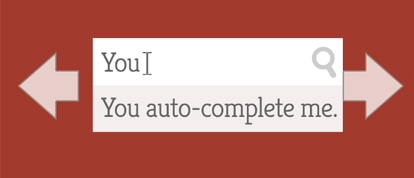
autocomplete

There are so many good articles on choosing a domain/startup name, that I won’t write an article and repeat them. However, there is one tip that I have not read yet, but has become pretty important for me.

Make sure that your domain name is auto-completable.

Modern browsers do a bunch of auto-completing for you for URLs and search queries. People are used to typing in a few characters and then hitting <Enter>. By people, I mean me. And for me, a few characters is two characters.

Here are a few examples:

  • Google
  • Facebook
  • Youtube
  • Yahoo
  • Twitter
  • Wikipedia
  • Tumblr
  • Pinterest
  • eBay
  • Craigslist
  • Bing
  • Wordpress

These are all large sites, and have a different two-letter signature at the beginning.

Make sure you get your own two-letter signature. It would not be wise to re-use one of the signature above, or any other two-letter signature for a popular website that may be used by your target market.

P.S. This is post number #50 in a 100 day blogging challenge. See you tomorrow!

Follow me on Twitter @alexshye.

Or, check out my current project: Soulmix.

(Btw: I’m fairly happy with Soulmix. The overlaps in the Alexa Top 500 are sohu.com (#49), soso.com at (#50), sogu.com (#112), sourceforge.net (#163), softonic.com (#184), soundcloud.com (#191), so.com (#273), and soku.com (#466)).

Confidence or delusion?

Being an entrepreneur and/or founder requires confidence. You must believe in yourself. You must believe in your ability to get shit done. And, you must believe in your idea. If you don’t believe, then who will?

When this confidence hits reality, nasty things happen. 100% of startups begin with confident founders. You wouldn’t quit your job unless you had confidence in yourself. And, you wouldn’t get started in an idea unless you believed you could make it work.

Yet, the majority of startups fail.

What is the deal here? Is it false confidence? Or is it just delusion?

I can’t say I have an answer here. I merely write about it because I have noticed it within myself, and within the ecosystem, and would like to throw it out there.

How do we deal with confidence and our own psyches when startups have such high failure rates? How do we maintain the confidence? And more importantly, how do we determine when our confidence is actually delusion?

P.S. This is post number #49 in a 100 day blogging challenge. See you tomorrow!

Follow me on Twitter @alexshye.

Or, check out my current project: Soulmix.