Hello, dear reader.
Are you being made for a sucker on the interwebs? Do you find yourself clicking on random links only to be let down by crappy content?

If you find yourself nodding, it is OK. Many of the smartest readers have been tricked, time and time again, into reading junk.
Here is why. People think that on the web, content is king. This is B.S.
The headline used for the content is king.
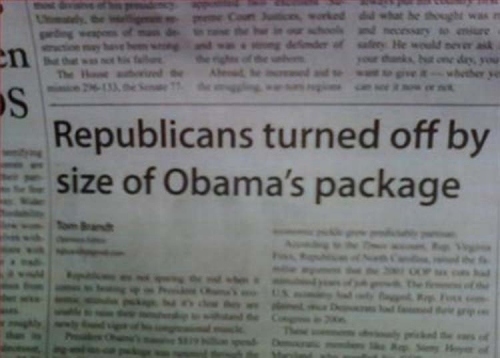
The headline is an ad for any particular piece of content. This ad is placed all over front pages, within content aggregators, and within your various social feeds.
A cleverly created headline creates an irresistible urge to click.
They want your clicks. And by they, I mean the writers on the internet.
Your clicks drive page views, which drive ad impressions or sales, which means money!

To get your clicks, writers have devised many crafty techniques for suckering you into clicking on their stuff.
Want to know how they do it?
Here are 8 secrets that the best writers use to trick the smartest readers into clicking.. and clicking.. and clicking… and clicking…
1. Explain something.
The best headlines tap into an emotion.
Articles that begin with ‘why’ or ‘how to’ tap into a pretty good one: curiosity.
Don’t you want to know why or how something works?

OK, you might know.
But even if you do, is there something in the article that you don’t know?
Click and read the article!
2. Ask a question.
A good question creates an sense of curiosity.
A great question taps into your fears; usually the fear of loss, or the fear of missing out.

Your health matters. Should you be listening to rap music?
The widespread use of questions has lead to a well-known principle known as Betteridge’s law of headlines, Davis’ Law, or just the Journalistic Principle: “Any headline which ends in a question mark can be answered with the word no“.*
So next time, go ahead and ask yourself the question.
Is the answer no?
Maybe you don’t need to read the article.
3. Add a number.
You love lists. Writers love lists. Everyone loves lists!
Lists are easy to read, they are bounded, and they provide a sense of organization.
It gets better for writers. List let you write with requiring a cohesive point. Just collect several random points, and write them down with numbers next to them!

Sounds easy to write? Yes, sir. We’ve got a good one going right here.
4. Overreach.
Have you noticed that many articles don’t just guarantee interesting information?
No, they guarantee success. They guarantee all of their dreams… and then some.
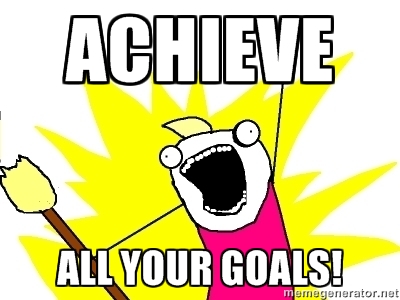
Writers know that if you are going to sell something, you might as well make it a strong well. People won’t realize what’s up until after the sell anyways.
Next time, don’t be a sucker. Recognize.
5. Be negative.
Another good way to tap into emotions is to be negative. There are many ways to be excessively negative. The easiest way is to just add a swear word into a headline.
Want proof that negativity works? Just check out the trolls on any internet forum.
Writers use the same troll tricks. Don’t feed them.
6. Add unnecessary adjectives and qualifiers.
There are all kinds of ways that writers use unnecessary adjectives and qualifiers.

They add adjectives like ‘smart’ or ‘stupid’. The word ‘smart’ will get your reading to figure out why you are so smart. The word ‘stupid’ will get you reading to figure out why you aren’t stupid.
Did you see that? It works either way!
And there is more.
They may also use extra qualifiers tell you want to think or do. Have you seen headlines with “things you need to know” or “you must read” randomly in the title? It is because once they tell you to, you magically will want to.
Beyond that, any word that increases curiosity is good. For example, ‘secret’ is good. Once you read it, you have to know the secret.
7. Invoke authority.
People trust authority. Even if the writer isn’t an authority, someone is.
Now, this authority could be a person. It is easy to name drop a famous CEO, actor, rock star, celebrity, or any other big figure. This can work pretty well.
But there is better. We have a higher authority, and that is SCIENCE.

Have you seen all those articles these days which are “backed by science”? Or “backed by psychology”? Writers do this because it works really well.
The infamous Migram experiments have shown how susceptible people are to authority figures. That includes the authority invoked within headlines. Once you see the authority, it is trusted, and the content in the article must be legit.
Tread carefully when you see this.
Sometimes this is something interesting there. Other times, you will just a crappy quote, graph, or citation. Or even worse, you may only get a link to a Wikipedia article about science.
8. Combine these tricks together.
All of the tricks work. And they work even better together.
That’s it folks.
Now you know.
Next time you read a headline, make sure nothing fishy is going on.
You can stop being this guy:

And start being this guy:
Your turn.
Do you know any other dirty secrets used to write catchy headlines?
Make the world a better place and share them in the comments!
—
Follow me on Twitter here!
Check out my current project Soulmix, your daily mix of food for the soul. Request an invite now for free early access to the private beta!
P.S. This blog post could also be known as, “Why we alter headlines on Soulmix“.
* For more on Betteridge’s law of headlines, check out @BetteridgesLaw and @YourTitleSucks.









 Alex Shye