Be good

I like the idea of using this blog to note big lessons that I have learned in life. I have already written about the most important lesson I’ve ever learned (just do it!), as well as another important lesson on how the world is gray.

There is another big lesson that consistently pops up in my life: be good.

There are so many things some we may strive for in life. We want to be happy. We want to attract the opposite sex. We want that girlfriend/boyfriend, and that great wife/husband. We want that awesome job. We want that next promotion. We want to be socially aware. We want to be great leaders. We want to be powerful speakers. We want to be charismatic.  We want to have a close group of friends. We want to truly connect with others.

There are many ways we can go about striving to attain each of these things. People will give you advice. Experts will publish online, and magazines and books. You will hear tips, tricks, and lifehacks. These are all fine, but there is only one thing that matters: be good.

What does it mean to be good? Simple. Be genuinely good at whatever it is that you want. If you aren’t good, then the only thing that matters is to get good. Tips, tricks, hacks, and advice can be good, but can also be a distraction. They only matter if they help you get good at what you want.

Here are a few examples

Happiness.

Everyone wants to be happy, but many expect it to happiness to happen to them. That isn’t the way life works.

If you want to be happy, you have to get good at being happy. It means actively recognizing and finding reasons to be happy. It means creating happiness, and exchanging it with others.

You are only happy when you get good at being happy.

Career.

We all want great jobs. We want that promotion. That great title. That startup exit. Or that position of respect and influence.

To get there, you will hear all kinds of advice. Dress this way. Network this way. Communicate with your boss like this. Manage your team like this. Build your product like this. Follow these steps to gain leverage in your organization.

What always gets lost in the mix is the most important thing: be good.

That is all that matters. So many people are looking to be promoted to that specific job title so that they can have influence. They have it the wrong way around. You gain a position of power when you have influence.. when you are good.

Whatever our job is, you will almost always be best served by focusing on your craft. Be good. And when you are good, figure out how to get better.

Personal relationships.

People spend an amazing amount of time thinking about how to attract a partner. They will expend an incredible amount of energy, change how they dress, how them act, how they talk, etc. As an example, just take a read through The Game, a fascinating book on the world of pickup artists.

Again, only one thing matters: be good. In this case, simply be a good person. Have a set of values. Stick to them. Genuinely care about others. Respect others and respect yourself.

If you want that great girl, be a great guy. If you aren’t a great guy, she will find out. And vice versa. You can’t trick someone into thinking you are someone else.. at least not in the long term. If you are smart about it, your best bet is to just focus on being awesome.. and then that awesome person will like you.

See the pattern here?

I could go on and on.

I often go through the same pattern. First, I find myself wanting something. I find myself thinking about it, reading material, and trying tips and tricks. After investing some time in it, I realize that only one thing matters: be good.

It happens time and time again across many aspects of life.

I’m now in the process of trying to imprint this lesson into my head. Writing it down helps.

Is there something you want to be or achieve? Be good. That is all there is to it.

P.S. This is post number #81 in a 100 day blogging challenge. See you tomorrow!

Follow me on Twitter @alexshye.

Or, check out my current project Soulmix.

Exploring the new

In my car, I keep a pile of mp3 CDs containing various mix tapes. The mixes range from 70’s funk/soul, to 80’s big hair band rock, to 90’s old school hip hop and current house and trance music. 90% of the time, I toggle through different mix tapes when I drive. There is so much good music that has already been made that I don’t ever get bored of it all.

But every so often, I get this itch, and think to myself, “hmmm, something good must have come out”. I switch off the CD player, flip on the radio on, and then spend a few days toggling through various radio stations.

Every time I do explore the radio, something interesting happens.

At first, everything sounds so new.. and so weird. I notice how musical styles have changed. And, I notice that new artists have come onto the scene. If I’m being honest, most of it sounds pretty bad. And most of it is bad! Compared to the great 70’s, 80’s, 90’s, and 00’s, there is a lot of bad music on the radio.

I don’t know why, but I always persist with my radio exploration anyways. I think it is because I am inherently a hopeful person. I want to believe something great has been created, and I want to be delighted.

And, if I stick with it long enough (usually it is just a few days), invariably, the same thing always happens. First, I start to gain a taste for some of the new styles. Second, I always stumble across a few artists or songs that I really love. Third, and most importantly, I almost always love these new songs/artists for a new reason. A while ago, it was an obsession with John Legend. I loved how he created a modern version of the best soul music from the 70’s. Later on, it was Lil Wayne. His music was so different and out there, but his flow and his word combinations were just ridiculously awesome. Lately, I’ve grown an appreciation for Macklemore and Lady Gaga, both because they mix pop music with very important social messages.

The pattern always repeats itself. I get an itch, explore, find a lot of crap, and then find a few awesome things.

Yesterday, I kicked off the pattern again. This time, as I switched the radio on, I began to listen, and came across a bunch of crap. And then, I had an epiphany.

I knew I would come across something good at some point. And I was glad that I knew this. Exploration is the only way to discover anything new. It is the only way to keep up with the times. To some degree, it the best way to stay mentally young.

How many times have you heard the following:

  • Aww, the radio is full of shit. Back in my day, the music was way better.
  • Kids these days have crappy video games. Back in my day, we were way better off.
  • All these new apps are shit. 140 characters? Disappearing pictures? We solve real technical problems and solve real challenges.

This is what old people say. They have formed some connections in their brains, and are done with it. They have a mental model that seems complete, and they are willing to just go with it.

If you tell them to explore, they will tell you that the new stuff is full of shit. And they will be right. Most of it is. But some of it isn’t. Some of it is brilliant.. just in a different way. And these old folks who are mentally inflexible will never realize it.

So, as I switched on this radio yesterday and listened to bad music, I had this epiphany and smiled to myself. I thought of all the great artists I have discovered. I thought about how quitting my job 18 months ago to explore the new world of web/mobile technology is the best thing I’ve ever done for my career.

I know I will grow old of age, but I don’t want to grow old in the mind. I hope that I will always explore and wade through the new shit to discover the new gems and understand why they are so brilliant.

P.S. This is post number #74 in a 100 day blogging challenge. See you tomorrow!

Follow me on Twitter @alexshye.

Or, check out my current project Soulmix.

How are you going to change someone’s life?

change-your-life

Founders and entrepreneurs come up with different ways of generating and framing startup ideas. Some say to make stuff people want. Some say to make something that you want. Other may say to find a person’s pain point which you can solve/remove/relieve.

Recently, I’ve been thinking about another interesting way to frame this:

How are you going to change someone’s life?

This may be what matters the most. At the end of the day, your product must come in contact with a person, and it must drastically change their lives for the better.

  • Are you enabling people to do something they could never do before?
  • Do you help people save money? Even better, do you help them make money?
  • Time is money. Do you help people save time?
  • Do you help people improve their reputations?
  • Do you help them find/express themselves?
  • Can you help someone get famous?
  • Can you help them connect with people who matter? Or help them get laid?
  • Can you help someone get promoted?

I’ve started thinking that this is the best way to think about and frame your startup idea.

A common mistake people make (especially technical people like myself) is to get overly intellectual about a product. People will talk about features. They will talk about technical constraints and  focus on the mechanics of a product. These are all interesting, but what really matters is the impact of the product.

Facebook isn’t a social networking site. It helps you people connected with friends.

Twitter isn’t a micro-blogging platform. It helps people connect with the world.

Pinterest isn’t a curation platform. It helps people discover things they love.

Yelp isn’t a review site. It helps people decide where to eat/visit/go.

Google isn’t a search engine. It helps people find the information they need.

Focus on the user. If you can change a life, you may have a good idea on your hands.

P.S. This is post number #72 in a 100 day blogging challenge. See you tomorrow!

Follow me on Twitter @alexshye.

Or, check out my current project Soulmix.

Overvalued personal traits

halo-effect

One of the most frustrating things about human psychology is our tendency to overvalue a wide array of visible external traits.

The obvious one here is with beauty and attractiveness. When someone is attractive, we tend to assume that they also possess a number of other positive traits. Psychologists refer to this as the halo effect. This isn’t hard to believe. Just look out at the world. Look at the beautiful people in advertisements, and ask yourself, why do these beautiful people have to do with the product?

Attractiveness is overvalued within our society, even though it really has no correlation with the other positive traits.

This is just one example. There are many more.

We assume that those who are taller are more powerful, even if they aren’t

We assume that people well groomed are more respectable, even though being well groomed has no correlation to one’s integrity.

We assume that the loud ones will make good leaders, even though loudness has nothing to do with leading people.

We assume great public speakers, or charismatic people are fit for important jobs, even though they may have nothing to do with doing the important job.

We assume that decisiveness matters, even though the only thing that matters is the ability to make good decisions.

These false assumptions strongly affect the world that we live in. All of these overvalued personal traits shouldn’t matter, and yet they do. Attractive people get treated better than unattractive people. At work, the loudest are often heard the most. The charismatic interviewer tends to get the job. Our leaders tend to be tall, good-looking, well-groomed, and exceptional at public speaking.

And these false assumptions about external traits mask the important internal traits. Does someone has a strong set of values? Do they stick to their values? Are they trustworthy? Can they think through a problem? Can they think out of the box? Do they genuinely respect others? You can’t immediately tell whether someone has these positive traits, but they are the traits that really matter.

What can we do about these overvalued traits?

  1. First make sure you have the traits that matter. Be a good person. Hone your craft and up your skill level. At the same time, be aware of the overvalued traits that you can take advantage of. Some are natural, but some can be improved.
  2. If you find yourself dazzled by someones overvalued traits, be especially careful to look beyond it. If you don’t do this, you may be stuck with a bad boss, coworker, employee, friend, or significant other.

P.S. This is post number #67 in a 100 day blogging challenge. See you tomorrow!

Follow me on Twitter @alexshye.

Or, check out my current project Soulmix.

The world is gray

blue-flower

No one person is entirely smart or dumb. Instead, a person may be smart in a specific scenario. Or, they may be dumb. More often than not, they are somewhere in between.

Likewise, no decision is entirely right or wrong.  And no person is entirely right or wrong. There are reasons why something is right, and reasons why something may be wrong. For the toughest decisions, there is no right or wrong answer. You win some and you lose some.

As I grow up, this lesson continually reveals itself as one of the most important lessons in life. Most human problems are not black and white. There are too many facets of life, too many dimensions of our personality, too many potential people to deal with, and too many situations within the world for things to be the case. Instead, human problems tend to live in a gray area. And because business problems are often human problems, business problems also tend to live within a gray area.

Here are some important caveats:

  • People like to argue the two ends of the spectrum. They forget there is an entire gray area in between.
  • When you are presented with a problem, think hard about whether it actually is a problem. If you don’t think there is a problem, try to figure out why there might be a problem. Things aren’t as simple as problematic or unproblematic.
  • When you are presented with a few options, there are usually more options available.
  • If you think you are smart or dumb (or, right or wrong), you are probably somewhere in between.
  • If you think someone else is smart or dumb (or, right or wrong), they are probably somewhere in between.
  • In general, when you find yourself or someone else judging another person, the judgement is probably not entirely right or wrong. If the judgement is good, that isn’t always a bad thing: you just gave someone more credit than they deserve. If the judgement is bad, it is almost always a bad thing. Why put someone down like that?
  • If you are arguing someone who can’t consider the other side of something, it probably isn’t worth arguing with them.
  • When you think you won something, think about what you lost. And vice, versa.
  • When you see someone who tends to quickly and confidently come to decisions, they tend to be full of more bullshit than you can imagine. When you see someone who is tentative about being right, they probably have something interesting to add to the discussion.
  • When you give advice, there are reasons why it is right, and reasons why it is wrong. Same thing with when you get advice.
  • People who truly understand that the world is gray tend to be more humble.

Got any more? Let me know in the comments!

P.S. This is post number #66 in a 100 day blogging challenge. See you tomorrow!

Follow me on Twitter @alexshye.

Or, check out my current project Soulmix.

Looking stupid and going back for more

Today I tried Hot Power Yoga for the first time in my life.

I’ve done some yoga classes before, but this was the brutal. It was the hardest yoga class I have ever taken. And, it was in what felt like 90+ degree room.

The result?

It killed me. After the first 15 minutes, I hit a wall. The yoga moves were getting difficult, and the heat was unrelenting. I was sweating like crazy, my muscles wouldn’t do what they were supposed to do, and I would occasionally get light headed. I started taking breaks every few minutes. Halfway through the class, I just walked out and created an extra long water break. After my break, I went into survival mode: I just wanted to keep trying to do what I could, and then get out of there.

yoga

Not me.

The crazy part is that there were these girls that did it all. Yes, they were also sweating like crazy, but they could actually do all the advanced poses continuously without much of a break. They definitely belonged.

Me? I felt out of place, and being somewhat inflexible, I’m sure I looked pretty stupid there.

But that’s cool. Because it reminded me of many of my other firsts.

The first time I let loose on a dance floor, I bet I looked stupid. (Most likely I still do).

The first time I hit the bench pressed in high school, I probably looked ridiculous lifting just the bar.

The first web product I built after quitting my job was pretty bad. To an educated product person, it is probably just plain horrible.

At the beginning of anything, you always look stupid. They only way to get past it is to just own it, and keep moving.

And so I’m going back for more hot yoga tomorrow.

If I keep trying, one day I hopefully won’t look too stupid on the yoga mat 🙂

P.S. This is post number #64 in a 100 day blogging challenge. See you tomorrow!

Follow me on Twitter @alexshye.

Or, check out my current project Soulmix.
 

On rituals and special days

thanksgiving-dinner-holiday-feast-turkey-wallpapers-easter-wallpaper

Societies and religions have really figured something out with the ritual of special days.

Growing up, I used to think of these days as stupid. I wondered why we needed a day to celebrate our moms, dads, birthdays, anniversaries, etc. Shouldn’t living a good life and being respectful to others be good enough? I had the feeling that these days were created to indulge our consumer culture.

Recently, I’ve started feeling differently about special days. My new belief is these days are good for pretty much everyone in society.

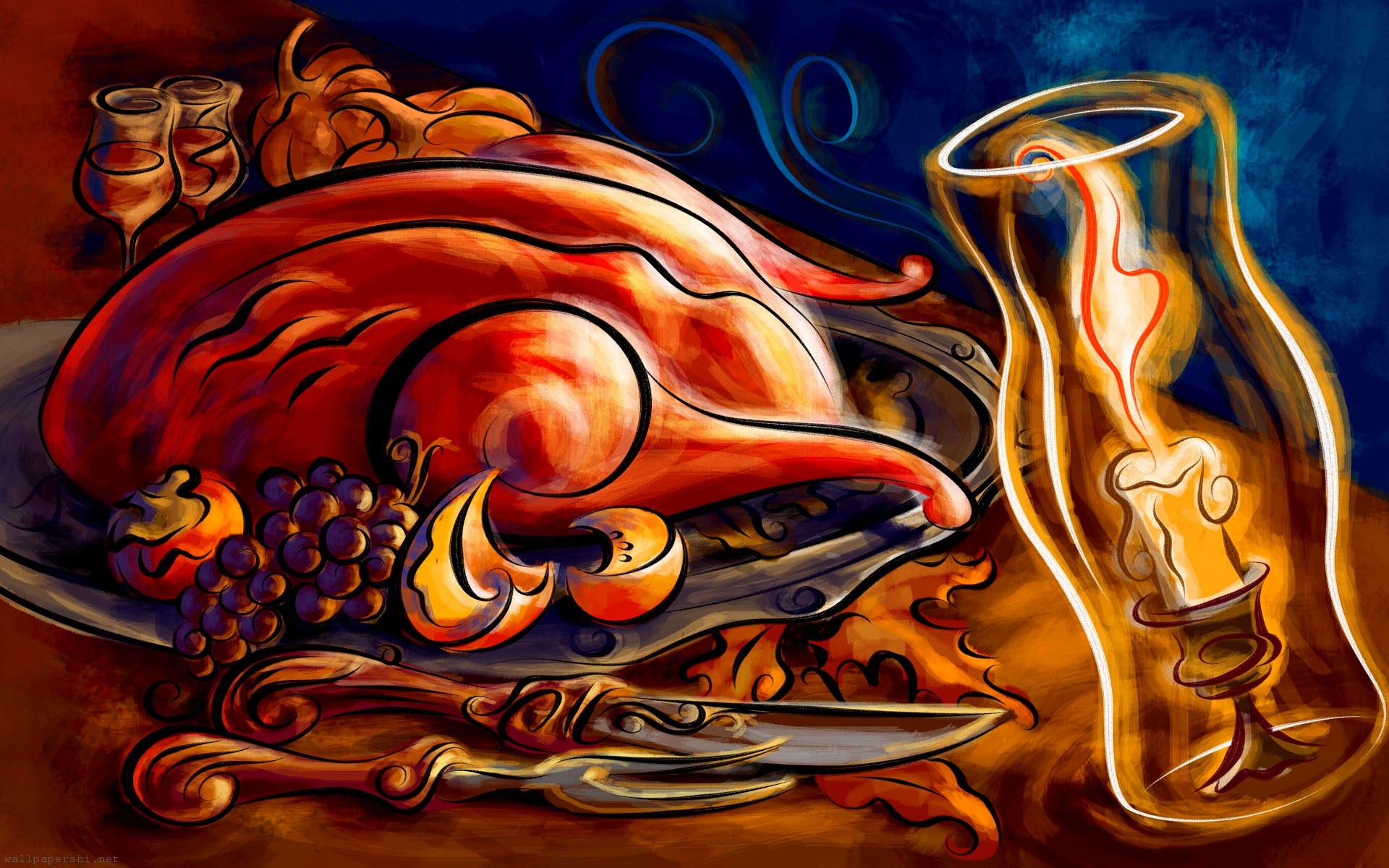
Let us use Thanksgiving as an example. It gives us a great excuse to consume a ton of food, but also exists to celebrate the practice of gratitude.

  1. For those that don’t practice gratitude at all, it gives them one day a year where it is normal to show your gratitude. This is a big step up from not practicing gratitude at all.
  2. For those that occasionally practice gratitude, Thanksgiving becomes a regular reminder to be grateful. It becomes a great regular reminder to be thankful about what you have in life.
  3. For those that regularly practice gratitude, it gives them a day where they can practice it with their loved ones around them. Even someone who is full of gratitude will enjoy the practice of having friends and family all congregate for this purpose.

This extends to all of the special days. In general, the holiday tends to be:

  1. An example that something special exists, or
  2. A reminder that you should appreciate something special, or
  3. An excuse to have an extra special day for something special.

All of them are great, and obviously, (3) is the best. I suppose what matters is that you can never have enough thanks and appreciation for others. Whether you use the special day as an example, a reminder, or an excuse, more appreciation is always a good thing.

Happy Thanksgiving! Hope you are stuffed, and had quality time with friends and family.

P.S. This is post number #63 in a 100 day blogging challenge. See you tomorrow!

Follow me on Twitter @alexshye.

Or, check out my current project Soulmix.

The fear of immediate loss

Loss is a fascinating thing. It taps into some of our greatest fears, and causes us to make irrational decisions. My past two posts have been on managing the fear of loss, and the fear of future loss. This post is on the flip side to the second topic: the fear of immediate loss.

This fear commonly occurs when we find ourselves in sub-optimal positions in life. We know that we need to change our circumstances, but know that this change will cause immediate loss, which leads to immediate pain.

This is the person stuck in a relationship that they aren’t happy about. Or stuck in a job that they aren’t happy about. They know a change is needed, but doesn’t it need to be right now? The immediate pain of a breakup sucks. Losing a current job, and a current paycheck also sucks. Beyond that, job hunting can be stressful. A career change can be even more stressful. We respond to this fear by procrastinating on making the proper change in our lives.

When we procrastinate on these changes, we introduce another kind of pain into our lives: the psychological pain of knowing we aren’t living the way we should. This psychological pain is initially small, but over time, it grows and eats away at one’s soul. With enough time, the pain becomes a large enough that we make the change we intended to make in the first place.

But do you see what has happens here?

The immediate pain is necessary. The psychological pain isn’t. It only exists because we wait and procrastinate. Sometimes it is days.. but more often weeks, months, years, or even decades. By then, we have (1) suffered an intense amount of psychological pain, and (2) potentially lost years or decades of our lives.

There is only one case where the immediate pain doesn’t occur, and that is when the procrastination is indefinite. This isn’t any better. In fact, it is much worse. Imagine living an entire life that is inconsistent with what you actually want in life. I wouldn’t wish this this pain on anyone.

The moral of the story?

If you know something has to happen, but fear the immediate loss, just get it over with. You don’t have any better options

P.S. This is post number #62 in a 100 day blogging challenge. See you tomorrow!

Follow me on Twitter @alexshye.

Or, check out my current project Soulmix.

Retirement and the fear of future loss

montgomery.sydney.lakem_

Yesterday, as I finished writing on managing the fear of loss, I realized that the topic could easily be a much much longer blog post. One of the problems with this 100-day blog challenge is that don’t have the time to write longer posts. So here is an addition to yesterdays post.

This post is on a particularly insidious type of loss aversion: the fear of future loss. The main example I have here is dealing with money and retirement, but there may be other examples.

As a guy that has quit his job and burned into his savings for the past 18 months, I am often in a strange position when I interact with most of my friends and acquaintances. My financial situation isn’t particularly enviable. I don’t have the money to live like a 30+ year old with a well-paying Silicon Valley job. Yet, my work is somewhat enviable. I will occasionally hear:

Man, what you are doing is great. I have a few ideas and would love to try them, but don’t think I can step away from my paycheck. The pay is too high, and I’m not sure I can eat into my savings and my retirement.

Basically, people occasionally envy that I am able to burn money that they can’t, or won’t. Strange, but I hear it fairly often.

So why won’t they do it? My take on it is that it is the problem of dealing with future loss. And it can be a big psychological problem; especially with money.

Let’s do the math here.

Let us say that a 30-year old is thinking about the value of a dollar for retirement and estimates a 10% growth in investments per year. This would mean that each dollar this 30-year old has will be worth over $28 at age 65, and over $72 at age 75! That is quite a multiplier, huh?

This 30 year old looks at their savings, does the math. If they stop taking a salary, they will lose out on a lot of retirement money. And it is worse than that. They will need to burn money, and they will lose out on the growth from that money also.

When looking at the numbers this way, it is a no brainer that this 30-year old should save their money and keep in the job. In fact, you can get as extreme as you would like. Why spend $1,000 on a vacation when it will be over $28,000 for retirement? Why buy a $1 Coke now, when you could have $28 in the future?

A person who is sufficiently afraid of this future loss will skimp on everything right now in order to reap the benefits in the future.

And in doing so, IMHO, they will have done themselves a great disservice.

Why? We only live once. At each age, there are things that we can do that will maximize our life experience. Vacations and trips may seem frivolous, but can turn out to be life-changing and eye-opening. Some vacations are best done when you are young. Others are best when you have a family. Quitting a job to start a business is requires energy. You must start relatively young. At the very least, you can’t wait until retirement age.

It is possible to push off some experiences for months or years. But thinking about retirement is insidious because it requires pushing things off for decades. At this point, it isn’t even pushing them off — it is ignoring them. It may mean ignoring experiences that will greatly add to your life. It may mean ignoring your hopes and ignoring your dreams.  By the time you retire, you will be too old for many of these things.

Of course, planning for retirement is important. These days, we can’t count of pension plans or social security for retirement. But, be careful with how you think about these things.

Valuable life experiences are invaluable — you simply can’t put a price on them.  It is tough to reconcile these experiences with the loss of future money, but it is tradeoff everyone needs to figure out at some point. When you decide, just make sure that you understand the price you have decided to pay, and that this price doesn’t lead to large life regrets. Because if does, you won’t realize it until it is far too late.

P.S. This is post number #61 in a 100 day blogging challenge. See you tomorrow!

P.P.S. I realize that this blog post is useless for the starving artists of the world. They clearly don’t have this fear of future loss. However, there are many people I know who aren’t these starving artists, but sometimes wish they could let go and try something. This post is for those people.

Follow me on Twitter @alexshye.

Or, check out my current project Soulmix.

Managing the fear of loss

Scientific studies have shown that psychologically, loss is twice as powerful as gain.

This is a crazy thing, and IMHO, causes poor decisions as well as a poor mindset in general.

Why is this?

The expectation of gain is hope. Hope does wonderful things for humanity and society. Is it only with hope that we can create a vision of the future, plot out a course towards the vision, and the put in the blood, sweat, and tears that are necessary to get things done. Hope drives progress. Hope drives innovation. As an entrepreneur, I am fueled by hope. Without it, I wouldn’t get anywhere. As a society, we all need hope to exist; the more cumulative hope we have in the world, the better off we are for it.

When we give in to our natural fear of loss, we give our fear twice the power it should have to squash our hopes and dreams. It is irrational, and it causes people be motivated by fear instead of hope.

The only way to manage this fear is to be aware of it.

The first thing you can do is to work to mentally treat loss and gain equally. That is already a huge step because it removes the 2x multiplier that loss usually gets. Realize that the $1 lost as the same value as the $1 gained.

However, in many cases (I would argue that in most cases), you can do much better than this: you can zero out the loss.

The trick is to manage your expectations. Ask yourself a few simple questions. What matters to you in life? Are you still alive? Do you have the basic necessities? Do you still have your friends and family? Can you pay rent/mortgage and find a way to eat? If so, what else do you need? How important is the actual loss?

Obviously, there are larger forms of loss. And there are important losses; especially the loss of loved ones. However, most of the loss we deal with in life are not these important losses. They are little (potential) losses that become large within our minds, and then cause us to make bad decisions and squash our hopes. Don’t give the little (potential) losses this power.

P.S. This is post number #60 in a 100 day blogging challenge. See you tomorrow!

Follow me on Twitter @alexshye.

Or, check out my current project Soulmix.