Good design is empathy

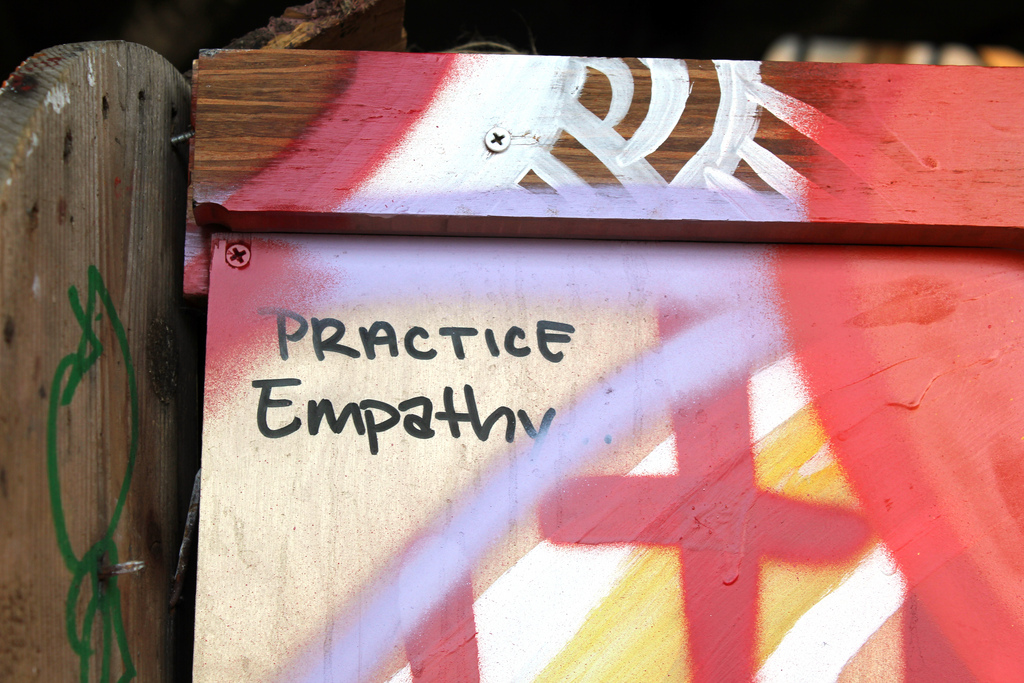
PracticeEmpathy

As a budding product designer, I’ve slowly been putting together my philosophy for what great design means. Yes, we all have Dieter Rams’ ten principles for good design, but I’ve always been a fan of coming to my own truths.

If a previous post, I boiled good design down to three things. In short, they are:

  1. Good design is useful.
  2. Good design minimizes cognitive load. (I expanded on this one here).
  3. Good design is beautiful.

Upon reflection, I still strongly agree with all of these, and I haven’t come up with another rule for myself yet.

However, I have started to believe that all of good design comes down to one overarching skill: having empathy.

You can’t create a useful design without empathy. The designer must have a deep understanding of the user. What is the user’s exact need? Where would they use it? When would they use it? And, how would then use it? What would their environment look like, and how does it affect the design?

You can’t minimize cognitive load without empathy. At each point of user interaction, the designer must understand exactly what the user is going through. What is the user thinking? What do they know? What don’t they know? What are they trying to do? What are they looking for? Where is there attention, and where should there attention be?

Making a product beautiful matters because it delights the user. I remember when I bought my first Mac laptop. I could have bought the white plastic iBook, but I splurged and bought the aluminum Powerbook simply because it was a beauty. It looked great. It felt great. I wanted to own it, and I loved using the product every day. Beauty surely isn’t the most important part of good design (which is why it is third), but if you care about delighting the user, it matters.

To some degree, it makes perfect sense. I just found it a surprising thought, since it sounds so simple. If a product is built for people, then the best designers should have the best understanding of people.
Moar thanks

RandyPausch-TimeManagement-Thanks-mod

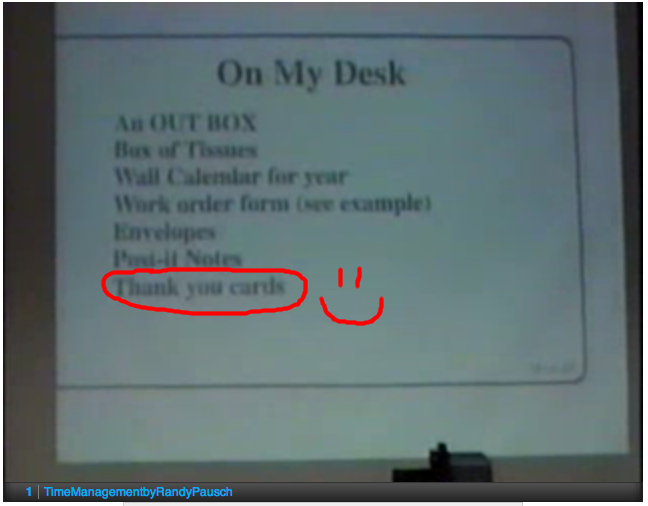
This is a screen capture from a talk by the late Randy Pausch on time management. If you haven’t seen the talk, it is a great talk. Highly recommended.

During the slide, he mentions the importance of focus and organization in your working environment, and uses his desk as an example. He only has a few his desk:

  • An outbox that acts as an interface for physical things between him and his secretary.
  • A box of tissues. A class he teaches is particularly tough, and offering tissues is useful to comfort students who cry.
  • A wall calendar.
  • Work order forms.
  • Envelopes.
  • Post-it notes.
  • Thank you cards.

The last one stuck out at me. How many people have thank you cards on their desk?

Randy goes on to explain the importance of ‘thank you’s. People don’t say thanks enough, and it can make a huge difference. We tend to focus on the bad stuff in life, and forget the good. ‘Thank you’s help remind people the good that they have done. Even if nothing has gone wrong, that in and of itself can be a good thing. Randy mentions often thanking is secretary when things have gone smoothly: “a few weeks have gone by, and nothing has gone wrong. Thanks!”. There are even benefits to saying ‘thank you’. Once Randy thanked an attendee at a conference, who turned around and offered him a lucrative contracting job. So saying ‘thank you’ may even be a great strategy for advancing your career. Even so, the reason to give thanks is because it is the right thing to do.

This particular part of the talk greatly inspired me.

My desk is cluttered with much more than seven things on it, and none of them include thank you notes.

Perhaps it is time to get some, and spend some time actively giving thanks.

It also makes me think. Written letters are great because they feel very personal, but they require time, as well as a known mailing address. Email is more convenient, but feels less personal.

Is there a better way to send thanks? Hmmm.. perhaps there’s an app for that. If there isn’t, there should be 🙂

To feel alive

RUSH

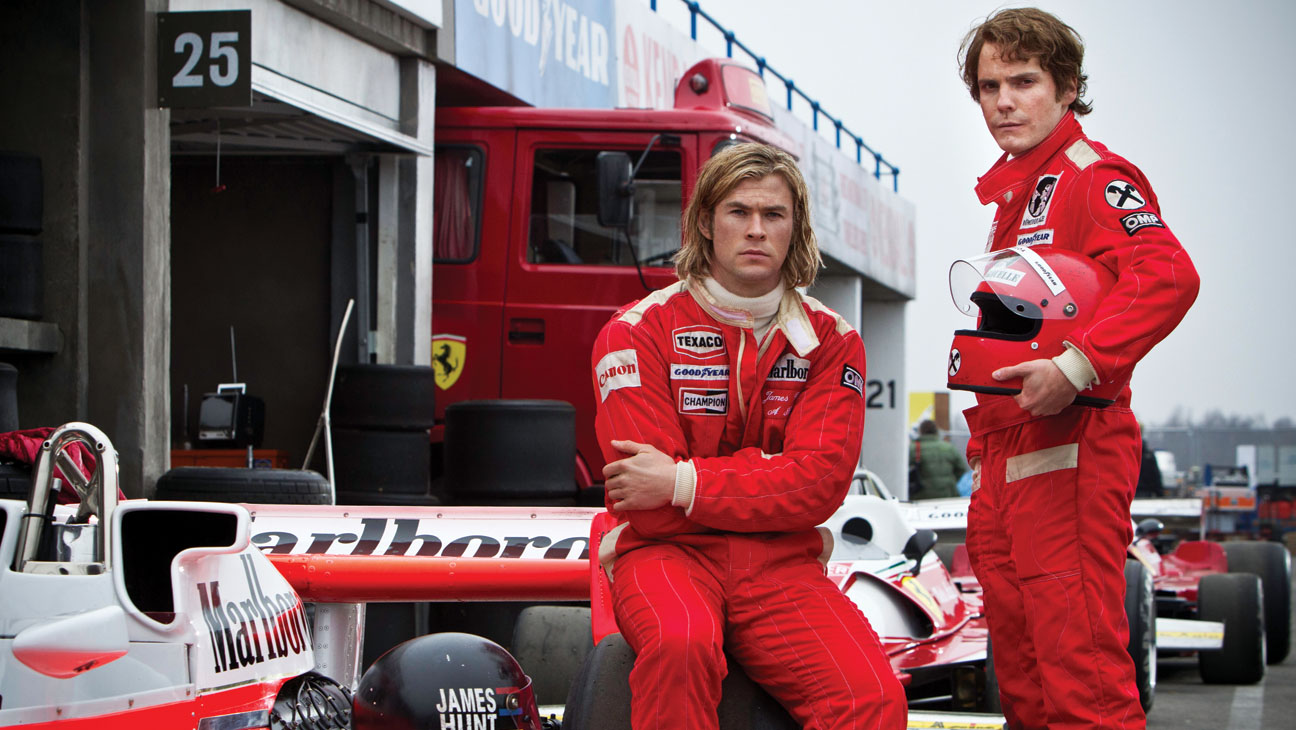
I recently watched the movie Rush, a movie on the 70’s rivalry between Formula 1 drivers Niki Lauda and James Hunt. In a voice-over early on in the movie, James Hunt talks about women, driving, and feeling alive:

I have a theory why women like racing drivers. It’s not because they respect what we do, driving round and round in circles. Mostly they think that’s pathetic, and they’re probably right. It’s our closeness to death. You see, the closer you are to death, the more alive you feel, the more alive you are. And they can see that in you, they feel that in you.

This quote immediately rang true, and stuck with me: not the part about women (I’m sure it may be true), but the part about feeling alive.

The closer you get to death, the more you feel alive.

The thing is, this is pretty extreme. I’ve never had a real brush with death, and most of the people I know haven’t either.

For us, there may be another less-extreme way to put it:

You closer you get to failure, the more alive you feel.

This feels very true to me, although I admit I have only learned it recently.

For most of my academic/working life, I wouldn’t say that I did much which made me feel particularly alive.

In school, many things didn’t matter. Sure, an ‘A’ was tough to get. But for the most part, passing (i.e., getting a D- or better) was pretty easy. Grad school was similar. Getting a specific paper published was difficult, but with time, most PhD students figured out how to graduate with a paper or more. With so many PhDs graduating, failure didn’t feel like a huge concern.

Since I quit my job, things have drastically changed. Failure is a real option. I have already worked on several projects that have not panned out. These failures have cost me time and money, both of which are valuable. I make no money at the moment. I am spending from my savings, and each month without some sort of success eats into these savings. Each month brings me closer to going broke, which would feel like a real failure.

In short, I’m trying to say that my ass is on the line. I feel it every day, and it can be pretty stressful.

But you know what?

After nearly two years of this, I wouldn’t have it any other way.

I feel alive. I feel that my work matters. There is real upside, and there is real downside. I am pushing myself, and I am trying to creating something meaningful in the world. Honestly, I can’t think of a better job.

Luke Wroblewski: Mobile to the future (Google tech talk)

I came across a great talk about mobile from the AVC blog from Luke Wroblewski on mobile product design.

Luke makes an insightful point that mobile isn’t just a smaller desktop. Similar to the text, music recordings, radio, TV, and the Internet, mobile is actually a new form of mass media. And as a new form of mass media, it is transformative. We shouldn’t be designing for mobile as if it was a smaller computer. We need to treat it as an entirely new things.

He notes how Facebook has become a mobile company, and how more and more companies will hit a point where mobile traffic outpaces desktop traffic.

The bulk of this talk goes through one example of rethinking login design for mobile. All in all, a great talk for those thinking about mobile trends and mobile design.

Mastering art and craft

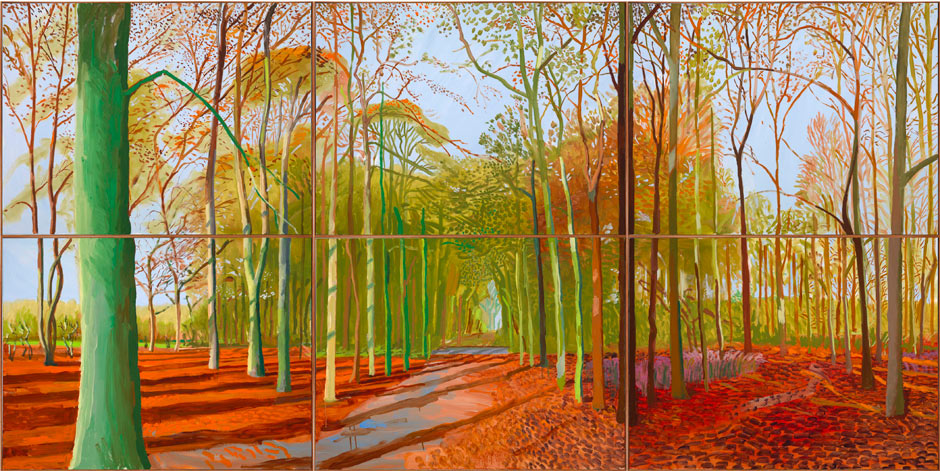
David-Hockney-Woldgate-Wo-001

I had never really been one for museums. I’ve visited a few, but have always gotten bored after ~20 minutes.

Last weekend, I took a trip up to the de Young Museum in San Francisco to see the David Hockney exhibit and something great happened. I had an awesome time!

What made the difference?

Museums usually cover vast areas of art, time, styles, etc. As I walk through, I appreciate that the art is good, but you get a few pieces per artist and then you move on to the next artist. And then the next time period. Something about this approach to art just doesn’t excite me.

This exhibit was different. We spent all of the time on a single artist in one single, large, multi-room exhibit. It wasn’t just a few rooms; it was many. The exhibition was called ‘David Hockney: A Bigger Exhibition‘, and damn did it live up to its name (as far as I can tell, but I’m no museum buff).

The exhibit showed David Hockney’s work throughout a good chunk of his career, and it was mesmerizing. It showed many of his sketches. It showed his oil paintings he is well known for. It showed the work from his two years experimenting with watercolor painting. It showed is large works of art, using several canvases to create a single piece (such as the image at the beginning of this article). It showed art that he created on the iPhone and the iPad. It covered everything, and it was amazing.

Most importantly, you could feel David Hockney’s passion. You would see an oil painting of a random person sitting in a chair. And then another with a different random person. And another with someone else. You see a painting of a landscape. And then the same landscape in a different season. Or under different lighting. Or in an abstract art style. Towards the end of the exhibit, I noticed the exact dates on his iPhone and iPad drawings. David Hockney is 76 years old now, and is drawing every day!

I realized that museums don’t excite me. But, artists do.

This was a story of a man who loves his craft. It wasn’t about a few pieces. It was about creating.. every.. single.. day. It was about repeating scenes, and making sure to appreciate the difference in lighting or seasons. It was about exploring a single medium (oil painting), and then another (watercolor), and even the more modern mediums (iPhone).

I left the de Young museum incredibly inspired.

David Hockney has painted for 50+ years. Over the years, he has created an amazing amount of great art. And he is still at it.

It has made me think a whole lot about how I approach work and career. If I chose something I was passionate about, and then worked at it everyday for 50+ years, what could I learn? What could I accomplish?

Maybe that is the trick to mastering a craft. It isn’t complicated. It just requires passion, and continued effort over time.

(For those in SF Bay Area, this weekend turns out to be the last weekend of this exhibit. If you have the chance to see it, I would highly recommend it.)

Helping people be who they want to be

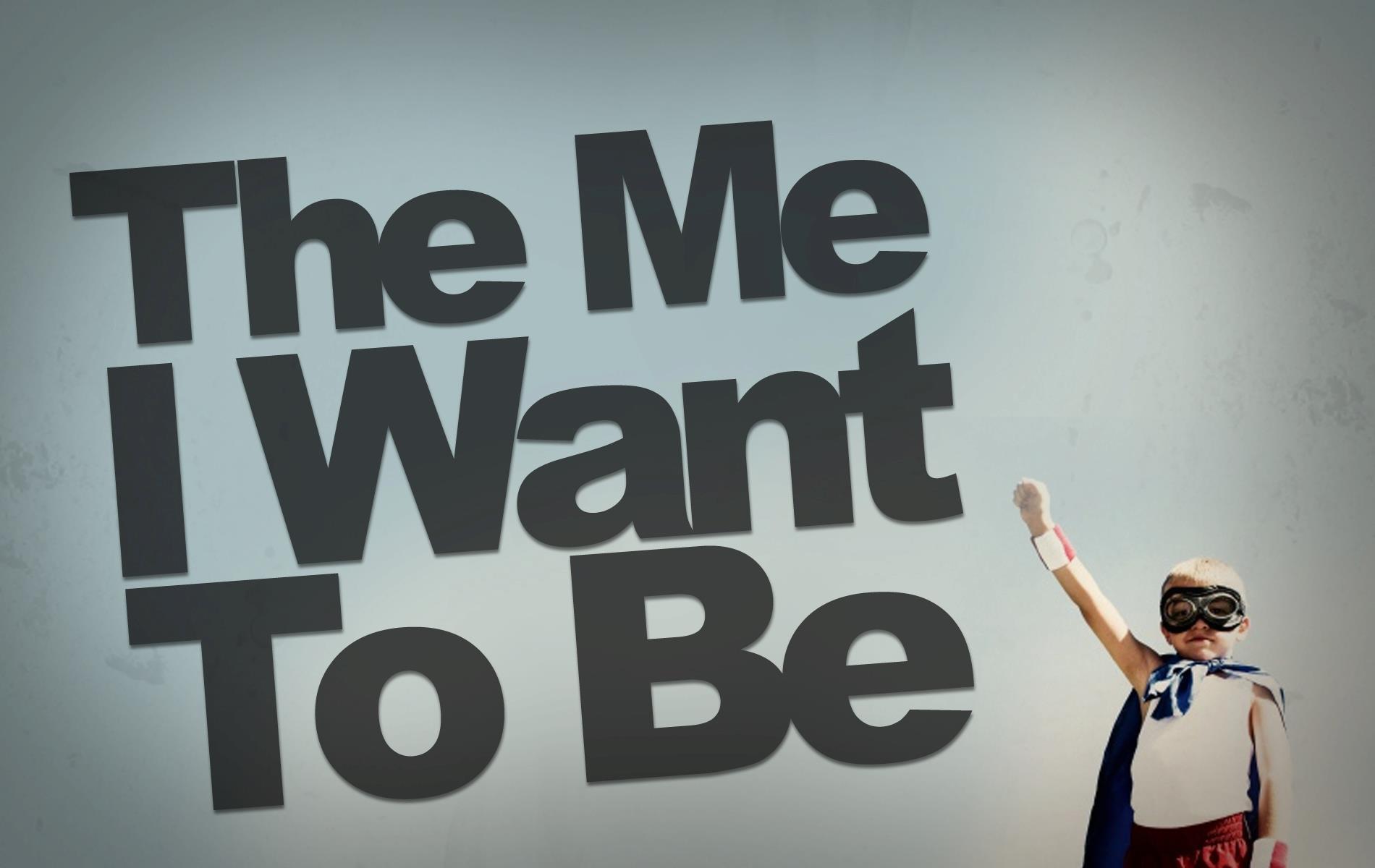
The-Me-I-want-to-Be

I’m an idealistic person by nature.  I’m also really into personal development, life hacking, etc. As a result, I often think about different ways to change my mindset, behaviors, and habits.

Thinking about change is all good when it comes to myself. At any given moment, I know what I want to be, and anything I can do to change into a better version of myself should be a good thing.

Things get much tricker when applied to others. It isn’t always all good. Other people have different mindsets. They are motivated in different ways, and want different things. Thinking about changing someone else can be a very dangerous thing. Go about this the wrong way, and you could lose some friends. At the worst, you could be viewed as manipulative and it could destroy relationships.

Still, I care about myself, and I care about others. I can change (I think?), and so should others right? If I could do something great for the world, I would like to help others change.

However, as I grow older, a lesson repeats itself, and it is starting to be clear to me.

And the lesson is this:

You can’t just change people, or tell them what to do. You can only help people be who they want to be.

If you believe this, there are a few ways to go about genuinely helping people.

  1. Help them define who they want to be. Some people don’t quite know what they want to be. If you can help someone begin thinking about what they want to be, that is huge. Others have an idea of who they want to be, but are still figuring it out. I’d say most people are in this camp. For these people, whatever you can do to get people to refine their vision of themselves is a win.
  2. Inspire them to be who they want to be. Real change can take courage, and inspiration is always good. Sometimes you do this by kicking them in the ass. Other times you are their cheerleader. Or, in the right circumstances, it can be as simple as just being yourself.
  3. Actively help people be who they want to be. There are several ways to do this. You could be a supportive shoulder to lean on. You could help make it socially OK to be who they want to be. You could lower or remove barriers in their way. Or you could help them leap forward: it could be monetary (such as investment money), social (making an intro to someone important), whatever.

As far as I can tell, any time spent doing these three things is time well spent.

Derek Sivers: How to start a movement

People often make the analogy between starting a movement and getting a startup off of the ground. People also tend to glorify the leaders/founders for getting the movement going.

Derek Sivers has a really interesting take on this, and observes the importance of early followers. This is a short video, and I won’t spoil it anymore than that. If you haven’t seen it, it is definitely worth a view.

http://www.youtube.com/watch?v=SsvYQKcX_GY

Securing investment from others

An important part of building large scalable startups is securing investment money. The cash infusion is important because it allows you to grow much faster than you would normally be able to grow. In winner-take-all markets, this can be the difference between success and failure.

Securing investment isn’t just for startups.

When you get hired for a job, it essentially means that your job is making an investment in you. Your boss has decided to place a certain amount of money in your direction, with the expectation that the cash investment will pay off in the future.

You could make a loose analogy with relationships also. They say time is money right? Time can often be more valuable than money, since you can never get time back. When someone decided to spend time with you, they are investing their time with you. The expectation is that the time is well spent, and that there is some type of reward/benefit for them. Relationships don’t always work this way, but I would argue that a great two-way relationship does: both people invest their time in each other, and both people help each other grow.

Securing outside investment can be a scary thing. It isn’t your decision. Someone else makes the decision to invest in you.

In order for someone to invest in you, you much either (1) be a good investment, or (2) seem like a good investment.

Both strategies will work, except that (1) will produce long-term benefits for the investor, and (2) will most likely will never produce any type of benefit. What follows seems clear. You should shoot to be (1). Be a good investment. With (2), you are just duping people, and it will never work out for you in the long run.

How do you become a good investment?

You can hope for friends and family to invest because they care about you, but at the beginning, the only person to who can definitely invest in you is YOU. You may not have money, but you have your own time. And, with that time, you can choose where you place your attention, what you learn, and what you do.

When you have developed yourself enough (emotionally, physically, mentally, tactically, etc.), you will simply BE a good investment. And when you are a good investment, you just be yourself, tell the truth, and it should’t be hard to get outside investment.

What are you after? VC money? The job? That awesome girl or guy?

Become a good investment, and you will get what you deserve.


Are you living life to decrease downside or enable upside?

Image credit: Simon Gardiner (NYC)

Image credit: Simon Gardiner (NYC)

I’ve been trying to tweet more, and as many bloggers must have learned, it is a great way to kick off blog posts. Today, I tweeted this:

I was thinking about relationships, as well as career, and it felt true to me when I tweeted it. Whenever I have a thought like this, I try to be careful about it. I believe that for the most part, the world is a big gray area, and that often choices presented like this end up being a false dichotomy.

Still, I can’t shake the feeling that for some big things in life, this dichotomy exist. Again, lately I have been thinking about relationships and career.

Relationships.

In real adult relationships, you have one real choice to make: are you going to open up and trust this person?

Really, the issue is whether you will ever make yourself vulnerable.

The surest way to minimize your downside in a relationship is to never fully trust someone. If you never place your heart, hopes, and dreams in their hands, they will never have the chance to squash them. And you will never really get hurt. However, the result is that you will never have a relationship anywhere near ideal. There is no upside. You have just minimized the downside.

If you allow yourself to be vulnerable, and to trust someone, you have placed yourself in a different game. You have the potential for a beautiful relationship, but are also vulnerable enough to be seriously hurt. Here you enable upside, but include the potential for a large downside also.

Career.

To some degree, your career is your life’s work. Yes, you’ll probably raise a family, and hopefully that will be awesome. But we also spend so many hours a day working. All of these hours make up a significant portion of our lives.

So how are we going to spend these hours of work? What will be your life’s work?

The surest way to minimize your downside in a career is to do the safe thing. Go to school, study a topic that teaches employable skills, take a stable job, and save. Along the way,  you’ll probably be able to buy that car, that house that you’ve wanted to raise your family in, and hopefully have a good nest egg so that you can retire by 65. However, you’ve also minimized your upside. You’ve minimized your ability to dream, and potentially do thing that you think you were meant to do.

On the flipside, you could follow your interests and follow your passions. If you love music, double down on it. If you want to be a artist, find a way to become an artist. Figure out what you want to create for the world, and work away at it until it happens. By doing this, you enable two upsides. First, you allow yourself to have passions, and create the world that you want to create. Second, you open up the possibility for huge upside with respect to salary. If you create something of great value, the world will trade money for your creation. That is massive upside. Of course there is a large downside: you risk never make a good living, as well as never creating something of value (it is hard!).

What do you choose?

There may be a middle ground, but it isn’t as easy as it sounds.

For example, for relationships, you have to decide whether you really want to become vulnerable and open up with someone else. You can’t go halfway.

For career, there is more of a gray area. You could be risky for a few years, and then take the safe route as you get older.  I must admit I haven’t experienced enough of life to know how things work, but I can speculate. And my gut instinct tells me that those which change the world are those that go all in. Following your passions and creating isn’t something to just dabble. You will fail over and over and over. There is a reason that only the passionate ever really change the world — the rest quit.

So what is it going to be? Are you going to minimize downside or do what you can to enable your upside?

I thought I understood clickable headlines, and then I realized that I missed the most important thing

Last year I wrote a blog post on the 8 secrets that writers use to trick readers into clicking on their headlines. I shared the blog post on Medium a little later where the post went viral and got more than 20K views in the next few days.

Afterward, I felt proud of myself. Having a post go viral feels great. But beyond that, I thought I understood headlines .I thought I understood most of the important tricks writers used for clickbait headlines, and I felt informed enough not to be duped by bad headlines.

Recently, then I looked back at the post, thought of Upworthy (the master of clickbait headlines), and realized that I missed the most important thing about great clickable headlines.

For those that don’t know, Upworthy has built a business of finding shareable content, and making it go viral by creating great headlines. They have mastered the art and science of it. For each piece of content, they come up with 25 possible headlines, and then put them through a system that tests each of them to figure out which headline is the best.

And if you look at their headlines, one thing pops up over and over: they create a curiosity gap.

That means that after you read the post, you immediate ask a question, “what? how? what happened? who?”.

The curiosity gap, is all over Upworthy. Just check out the image below of today’s headlines.

UpworthyCuriosityGap-1.12.14

See, it is all over.

Totally missed the curiosity gap *facepalm*.