
The world is gray

blue-flower

No one person is entirely smart or dumb. Instead, a person may be smart in a specific scenario. Or, they may be dumb. More often than not, they are somewhere in between.

Likewise, no decision is entirely right or wrong.  And no person is entirely right or wrong. There are reasons why something is right, and reasons why something may be wrong. For the toughest decisions, there is no right or wrong answer. You win some and you lose some.

As I grow up, this lesson continually reveals itself as one of the most important lessons in life. Most human problems are not black and white. There are too many facets of life, too many dimensions of our personality, too many potential people to deal with, and too many situations within the world for things to be the case. Instead, human problems tend to live in a gray area. And because business problems are often human problems, business problems also tend to live within a gray area.

Here are some important caveats:

  • People like to argue the two ends of the spectrum. They forget there is an entire gray area in between.
  • When you are presented with a problem, think hard about whether it actually is a problem. If you don’t think there is a problem, try to figure out why there might be a problem. Things aren’t as simple as problematic or unproblematic.
  • When you are presented with a few options, there are usually more options available.
  • If you think you are smart or dumb (or, right or wrong), you are probably somewhere in between.
  • If you think someone else is smart or dumb (or, right or wrong), they are probably somewhere in between.
  • In general, when you find yourself or someone else judging another person, the judgement is probably not entirely right or wrong. If the judgement is good, that isn’t always a bad thing: you just gave someone more credit than they deserve. If the judgement is bad, it is almost always a bad thing. Why put someone down like that?
  • If you are arguing someone who can’t consider the other side of something, it probably isn’t worth arguing with them.
  • When you think you won something, think about what you lost. And vice, versa.
  • When you see someone who tends to quickly and confidently come to decisions, they tend to be full of more bullshit than you can imagine. When you see someone who is tentative about being right, they probably have something interesting to add to the discussion.
  • When you give advice, there are reasons why it is right, and reasons why it is wrong. Same thing with when you get advice.
  • People who truly understand that the world is gray tend to be more humble.

Got any more? Let me know in the comments!

P.S. This is post number #66 in a 100 day blogging challenge. See you tomorrow!

Follow me on Twitter @alexshye.

Or, check out my current project Soulmix.
Notes from the PandoMonthly with Jason Calicanis

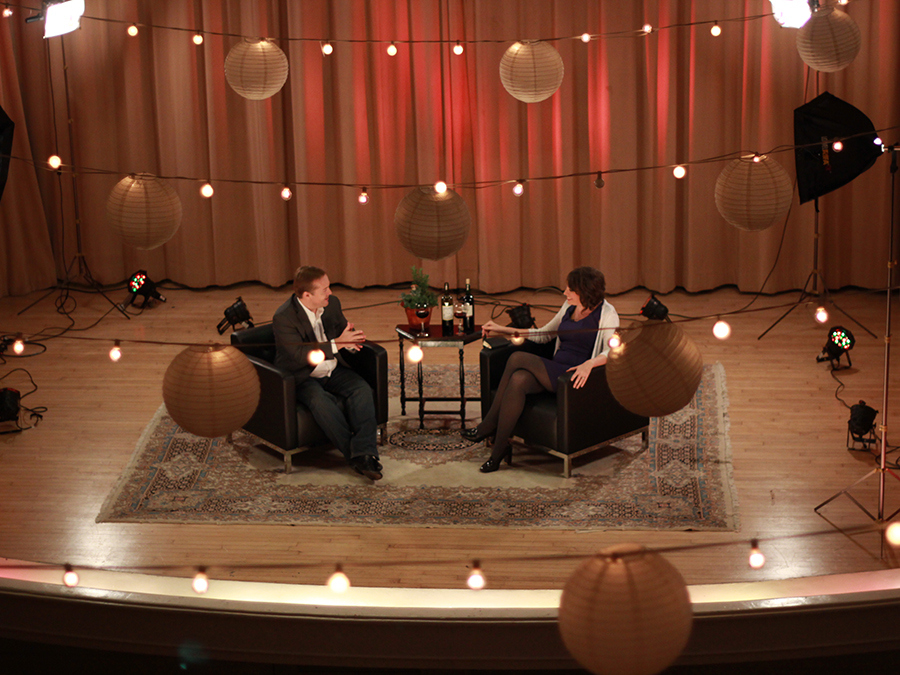
I’m quickly becoming a fan of the PandoMonthly fireside chat series. I love how the interviews mix useful information with casual conversation. It gives the viewer a good feeling for the personality and past experiences of each interviewee.

(Photo credit: Rebecca Aranda for PandoDaily)

(Photo credit: Rebecca Aranda for PandoDaily)

Last week I watched the PandoMonthly with Jason Calicanis, angel investor and founder of Weblogs (sold to AOL), Mahalo.com, and an upcoming venture at Inside.com. The interview is almost 2.5 hours, and has lots of great nuggets of advice in it.

Here were a few of my favorites (partially in his words and partially in mine).

  • On his past: Many great entrepreneurs have a complex relationship w/ their parents in their past. Jason saw his dad lose his business, and it changed him as a child, giving him a tremendous drive on succeed.
  • Entrepreneurship now: It has never been this easy to start a startup off of the ground, and it has never been easier to get angel funding. Finishing is much harder.
  • Focus on skills: If you can’t get traction, you don’t have your stuff together yet. Focus on building your skills and honing your craft. It has never been easier to et traction, but you have to know what you are doing. It’s not about tricks and tactics. It is about having a true vision, and knowing how to get users that truly believe in it.
  • Talking to investors: Be succinct when talking to investors. When you are at a restaurant, the chef doesn’t tell you everything about making the food. The chef only gives you the food, and lets you enjoy it. Do the same: create a simple and elegant product which solves a real problem. When you get things down, simply show your simple product and make it succinct.
  • Don’t diss unicorns. Entrepreneurs often put down existing big companies. Don’t do it! These companies are unicorns: they are one of the few that have made it big and provided big value to the world. Don’t diss the unicorn — respect them and then go out and find your own.
  • Only person stopping you is yourself. Many people don’t understand this. Don’t worry about everyone else. Shut up, believe in yourself, and get your skill level up.
  • Everyone is optimizing for wasting the user’s time. So many websites are optimizing their headlines and websites for user clicks. This cannot end well. It will result in a public that is diseased and diabetic from their information diet.

In particular, I love the last point and agree with it 100%. I wrote a blog post on how headlines are shitty these days. There has to be a better way to get information to the general public without resorting to these tactics. The current solution cannot be the long term solution.

P.S. This is post number #65 in a 100 day blogging challenge. See you tomorrow!

Follow me on Twitter @alexshye.

Or, check out my current project Soulmix.

Looking stupid and going back for more

Today I tried Hot Power Yoga for the first time in my life.

I’ve done some yoga classes before, but this was the brutal. It was the hardest yoga class I have ever taken. And, it was in what felt like 90+ degree room.

The result?

It killed me. After the first 15 minutes, I hit a wall. The yoga moves were getting difficult, and the heat was unrelenting. I was sweating like crazy, my muscles wouldn’t do what they were supposed to do, and I would occasionally get light headed. I started taking breaks every few minutes. Halfway through the class, I just walked out and created an extra long water break. After my break, I went into survival mode: I just wanted to keep trying to do what I could, and then get out of there.

yoga

Not me.

The crazy part is that there were these girls that did it all. Yes, they were also sweating like crazy, but they could actually do all the advanced poses continuously without much of a break. They definitely belonged.

Me? I felt out of place, and being somewhat inflexible, I’m sure I looked pretty stupid there.

But that’s cool. Because it reminded me of many of my other firsts.

The first time I let loose on a dance floor, I bet I looked stupid. (Most likely I still do).

The first time I hit the bench pressed in high school, I probably looked ridiculous lifting just the bar.

The first web product I built after quitting my job was pretty bad. To an educated product person, it is probably just plain horrible.

At the beginning of anything, you always look stupid. They only way to get past it is to just own it, and keep moving.

And so I’m going back for more hot yoga tomorrow.

If I keep trying, one day I hopefully won’t look too stupid on the yoga mat 🙂

P.S. This is post number #64 in a 100 day blogging challenge. See you tomorrow!

Follow me on Twitter @alexshye.

Or, check out my current project Soulmix.
 

On rituals and special days

thanksgiving-dinner-holiday-feast-turkey-wallpapers-easter-wallpaper

Societies and religions have really figured something out with the ritual of special days.

Growing up, I used to think of these days as stupid. I wondered why we needed a day to celebrate our moms, dads, birthdays, anniversaries, etc. Shouldn’t living a good life and being respectful to others be good enough? I had the feeling that these days were created to indulge our consumer culture.

Recently, I’ve started feeling differently about special days. My new belief is these days are good for pretty much everyone in society.

Let us use Thanksgiving as an example. It gives us a great excuse to consume a ton of food, but also exists to celebrate the practice of gratitude.

  1. For those that don’t practice gratitude at all, it gives them one day a year where it is normal to show your gratitude. This is a big step up from not practicing gratitude at all.
  2. For those that occasionally practice gratitude, Thanksgiving becomes a regular reminder to be grateful. It becomes a great regular reminder to be thankful about what you have in life.
  3. For those that regularly practice gratitude, it gives them a day where they can practice it with their loved ones around them. Even someone who is full of gratitude will enjoy the practice of having friends and family all congregate for this purpose.

This extends to all of the special days. In general, the holiday tends to be:

  1. An example that something special exists, or
  2. A reminder that you should appreciate something special, or
  3. An excuse to have an extra special day for something special.

All of them are great, and obviously, (3) is the best. I suppose what matters is that you can never have enough thanks and appreciation for others. Whether you use the special day as an example, a reminder, or an excuse, more appreciation is always a good thing.

Happy Thanksgiving! Hope you are stuffed, and had quality time with friends and family.

P.S. This is post number #63 in a 100 day blogging challenge. See you tomorrow!

Follow me on Twitter @alexshye.

Or, check out my current project Soulmix.

The fear of immediate loss

Loss is a fascinating thing. It taps into some of our greatest fears, and causes us to make irrational decisions. My past two posts have been on managing the fear of loss, and the fear of future loss. This post is on the flip side to the second topic: the fear of immediate loss.

This fear commonly occurs when we find ourselves in sub-optimal positions in life. We know that we need to change our circumstances, but know that this change will cause immediate loss, which leads to immediate pain.

This is the person stuck in a relationship that they aren’t happy about. Or stuck in a job that they aren’t happy about. They know a change is needed, but doesn’t it need to be right now? The immediate pain of a breakup sucks. Losing a current job, and a current paycheck also sucks. Beyond that, job hunting can be stressful. A career change can be even more stressful. We respond to this fear by procrastinating on making the proper change in our lives.

When we procrastinate on these changes, we introduce another kind of pain into our lives: the psychological pain of knowing we aren’t living the way we should. This psychological pain is initially small, but over time, it grows and eats away at one’s soul. With enough time, the pain becomes a large enough that we make the change we intended to make in the first place.

But do you see what has happens here?

The immediate pain is necessary. The psychological pain isn’t. It only exists because we wait and procrastinate. Sometimes it is days.. but more often weeks, months, years, or even decades. By then, we have (1) suffered an intense amount of psychological pain, and (2) potentially lost years or decades of our lives.

There is only one case where the immediate pain doesn’t occur, and that is when the procrastination is indefinite. This isn’t any better. In fact, it is much worse. Imagine living an entire life that is inconsistent with what you actually want in life. I wouldn’t wish this this pain on anyone.

The moral of the story?

If you know something has to happen, but fear the immediate loss, just get it over with. You don’t have any better options

P.S. This is post number #62 in a 100 day blogging challenge. See you tomorrow!

Follow me on Twitter @alexshye.

Or, check out my current project Soulmix.

Retirement and the fear of future loss

montgomery.sydney.lakem_

Yesterday, as I finished writing on managing the fear of loss, I realized that the topic could easily be a much much longer blog post. One of the problems with this 100-day blog challenge is that don’t have the time to write longer posts. So here is an addition to yesterdays post.

This post is on a particularly insidious type of loss aversion: the fear of future loss. The main example I have here is dealing with money and retirement, but there may be other examples.

As a guy that has quit his job and burned into his savings for the past 18 months, I am often in a strange position when I interact with most of my friends and acquaintances. My financial situation isn’t particularly enviable. I don’t have the money to live like a 30+ year old with a well-paying Silicon Valley job. Yet, my work is somewhat enviable. I will occasionally hear:

Man, what you are doing is great. I have a few ideas and would love to try them, but don’t think I can step away from my paycheck. The pay is too high, and I’m not sure I can eat into my savings and my retirement.

Basically, people occasionally envy that I am able to burn money that they can’t, or won’t. Strange, but I hear it fairly often.

So why won’t they do it? My take on it is that it is the problem of dealing with future loss. And it can be a big psychological problem; especially with money.

Let’s do the math here.

Let us say that a 30-year old is thinking about the value of a dollar for retirement and estimates a 10% growth in investments per year. This would mean that each dollar this 30-year old has will be worth over $28 at age 65, and over $72 at age 75! That is quite a multiplier, huh?

This 30 year old looks at their savings, does the math. If they stop taking a salary, they will lose out on a lot of retirement money. And it is worse than that. They will need to burn money, and they will lose out on the growth from that money also.

When looking at the numbers this way, it is a no brainer that this 30-year old should save their money and keep in the job. In fact, you can get as extreme as you would like. Why spend $1,000 on a vacation when it will be over $28,000 for retirement? Why buy a $1 Coke now, when you could have $28 in the future?

A person who is sufficiently afraid of this future loss will skimp on everything right now in order to reap the benefits in the future.

And in doing so, IMHO, they will have done themselves a great disservice.

Why? We only live once. At each age, there are things that we can do that will maximize our life experience. Vacations and trips may seem frivolous, but can turn out to be life-changing and eye-opening. Some vacations are best done when you are young. Others are best when you have a family. Quitting a job to start a business is requires energy. You must start relatively young. At the very least, you can’t wait until retirement age.

It is possible to push off some experiences for months or years. But thinking about retirement is insidious because it requires pushing things off for decades. At this point, it isn’t even pushing them off — it is ignoring them. It may mean ignoring experiences that will greatly add to your life. It may mean ignoring your hopes and ignoring your dreams.  By the time you retire, you will be too old for many of these things.

Of course, planning for retirement is important. These days, we can’t count of pension plans or social security for retirement. But, be careful with how you think about these things.

Valuable life experiences are invaluable — you simply can’t put a price on them.  It is tough to reconcile these experiences with the loss of future money, but it is tradeoff everyone needs to figure out at some point. When you decide, just make sure that you understand the price you have decided to pay, and that this price doesn’t lead to large life regrets. Because if does, you won’t realize it until it is far too late.

P.S. This is post number #61 in a 100 day blogging challenge. See you tomorrow!

P.P.S. I realize that this blog post is useless for the starving artists of the world. They clearly don’t have this fear of future loss. However, there are many people I know who aren’t these starving artists, but sometimes wish they could let go and try something. This post is for those people.

Follow me on Twitter @alexshye.

Or, check out my current project Soulmix.

Managing the fear of loss

Scientific studies have shown that psychologically, loss is twice as powerful as gain.

This is a crazy thing, and IMHO, causes poor decisions as well as a poor mindset in general.

Why is this?

The expectation of gain is hope. Hope does wonderful things for humanity and society. Is it only with hope that we can create a vision of the future, plot out a course towards the vision, and the put in the blood, sweat, and tears that are necessary to get things done. Hope drives progress. Hope drives innovation. As an entrepreneur, I am fueled by hope. Without it, I wouldn’t get anywhere. As a society, we all need hope to exist; the more cumulative hope we have in the world, the better off we are for it.

When we give in to our natural fear of loss, we give our fear twice the power it should have to squash our hopes and dreams. It is irrational, and it causes people be motivated by fear instead of hope.

The only way to manage this fear is to be aware of it.

The first thing you can do is to work to mentally treat loss and gain equally. That is already a huge step because it removes the 2x multiplier that loss usually gets. Realize that the $1 lost as the same value as the $1 gained.

However, in many cases (I would argue that in most cases), you can do much better than this: you can zero out the loss.

The trick is to manage your expectations. Ask yourself a few simple questions. What matters to you in life? Are you still alive? Do you have the basic necessities? Do you still have your friends and family? Can you pay rent/mortgage and find a way to eat? If so, what else do you need? How important is the actual loss?

Obviously, there are larger forms of loss. And there are important losses; especially the loss of loved ones. However, most of the loss we deal with in life are not these important losses. They are little (potential) losses that become large within our minds, and then cause us to make bad decisions and squash our hopes. Don’t give the little (potential) losses this power.

P.S. This is post number #60 in a 100 day blogging challenge. See you tomorrow!

Follow me on Twitter @alexshye.

Or, check out my current project Soulmix.

Notes on the PandoMonthly with Phil Libin, CEO of Evernote

Lately, I’ve been using my lunch breaks as a chance to catch up on interviews of entrepreneurs and VCs. It is the perfect opportunity to learn while eating. Since interviews can get pretty long, I thought it might be useful to blog on my favorite points from these interviews. I started last week with Albert Wenger’s interview.

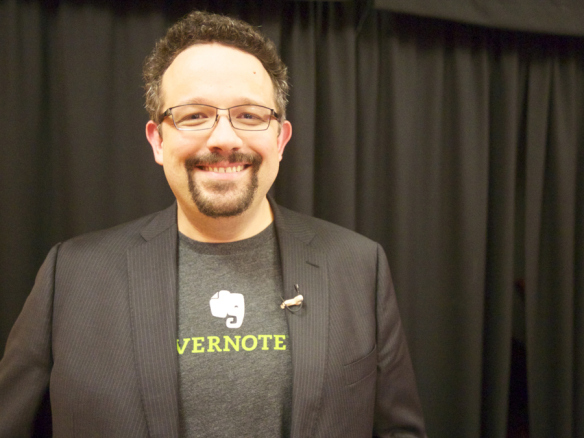
A few days ago, I greatly enjoyed the PandoMonthly with Phil Libin, the CEO of Evernote. Here are a few of the highlights from my recollection of the interview.

  1. On decision making: There are many ways to make decisions, and it is important to know why you are doing what you are doing. Phil is aware of his strengths and his interests, and uses them the best he can to optimize for impact.
  2. Don’t sell: Phil has sold projects/companies already, and he has known others that have also. Aside from the money, it often turns out to be a bad decision. Evernote came from the desire to create something that lasts. The way to do that is to create a company with a mission that is sufficiently epic to be your life’s work.
  3. Secret to happiness: Phil’s secret to happiness is minimizing the time you spend with those you don’t choose to be with. Related to this is a tip he got from Steve Ballmer: you only get to really know 100 people in your life, so be mindful of who you are spending your time with.
  4. Don’t listen to conventional wisdom: Conventional wisdom spreads because it encompasses an idea that is fun to repeat. This has nothing to do with being right. That is why conventional wisdom often turns out to be wrong.
  5. On power and simplicity in design: If you are ever designing something, and find yourself making a tradeoff between power and simplicity, you are doing it wrong. The great designs are both simple and powerful. There is no tradeoff between them.
  6. iOS7’s biggest innovation: fingerprint detection. Phil makes a great case for how Apple is continuing to innovate and how the fingerprint detection could be the answer to identity on the Internet. No more passwords, CAPTCHAs, or other hokey security. Apple has our fingerprints and they could be the key to identity in the future.

Of course, these are just a small number of my favorite insights from the interview. If you have the time, I would highly suggest the listening through the interview.

(Photo credit: Yelena Sophia/PandoDaily)

P.S. This is post number #59 in a 100 day blogging challenge. See you tomorrow!

Follow me on Twitter @alexshye.

Or, check out my current project Soulmix.
Don’t just masturbate

Masturbation is healthy and normal. And it can be good.. to a point. But, no matter what you do, or how often you do it, it isn’t the real deal. At some point, you’ve got to just do it.

Yes, I mean sex. But not just sex.

I’m a personal development nerd. It provides great food for thought, and it feeds my soul. But only to a point. Without action, the thought is worthless. It is simply emotional masturbation.

I used to be an academic, and let me tell you, it is can be an awesome life. You live in a world of novelties and possibilities. You publish your ideas and travel to talk about them. However, these are only ideas and words. When they don’t touch the real world, they become relatively useless. Instead, they become a form of intellectual masturbation.

I’m now an entrepreneur. I write on this blog. I read many other blogs, the new USV, Quibb, and Hacker News. I meet interesting folk. Through all of these things, I’m exposed to many interesting ideas/thoughts, and I learn a lot. But it isn’t enough. I need to get shit done. I need to hack, work on product, figure out what works and what doesn’t, work on what may become a future team, and pivot on the idea when necessary. And at some point, it needs to touch the real world. Without this, everything else that I do doesn’t matter. It purely entrepreneurial masturbation.

There are many form of masturbation. We all do them.

As mentioned above, masturbation can be healthy and good. Just don’t overdo it. At some point, you need to translate the thoughts and ideas into real-world action. That is where real satisfaction is.

P.S. This is post number #58 in a 100 day blogging challenge. See you tomorrow!

Follow me on Twitter @alexshye.

Or, check out my current project Soulmix.

What kind of CEO do you want to be?

ceo

Most groups of organized people have a chief executive officer (CEO). Even if there isn’t anyone with the title of CEO, there is usually someone acting as the CEO.

The CEO’s job is to be the chief leader and decision maker. The CEO is directly responsible for the whole organization. These responsibilities include:

  • Determine core company values, and personify these values
  • Create the company culture
  • Set the purpose and meaning of the organization
  • Set short and long term goals
  • Evaluate progress
  • Re-evaluate core values, goals, etc.
  • Make the tough decisions
  • Communicate clearly, internally and externally
  • Watch the finances and budget
  • …and more!

This is one heck of a demanding position. But it is very important. A good CEO can make a company, and a bad CEO can easily break a company.

Most people will never be the CEO of a Fortune 500 company. Most will never be the CEO of any company, large or small.

Does this mean can write off having any CEO responsibilities?

Nope.

You are still the CEO of a one-man organization: yourself. No one will do this job for you, and no one can do this job for you.

So how are you going to run your life?

  • What are your core values?
  • Do you personify these values?
  • What are you short and long term goals?
  • What do you intend to do with your life?
  • How will you know you are on the right track?
  • How will you re-evaluate your values?
  • How will you re-evaluate your goals?
  • How are you managing your relationships?
  • How are you managing your money?

A good CEO can make a company, and a bad CEO can easily break a company.

What kind of CEO do you want to be?

P.S. This is post number #57 in a 100 day blogging challenge. See you tomorrow!

P.P.S. This post is kind of a cheat post. It is from an old blog that never got off the ground and I deleted. But I like this post and am giving it a new place to live on the web.

Follow me on Twitter @alexshye.

Or, check out my current project Soulmix.