How my PhD unexpectedly carried over to entrepreneurship

When first quit my research job, one of my biggest fears was that I was throwing away my PhD degree.

I had spent many years in graduate school studying computer architecture/systems, learning the process of performing research, and publishing at top-tier venues. When I graduated, my career trajectory made sense. I would continue building a research career at Qualcomm Research, a leader in the mobile space that has tons of interesting problems to work on.

Quitting my job to be an entrepreneur felt like a huge career shift. In some sense, it definitely was. But as I get further as an entrepreneur (to be fair, I’m not that far), I’m surprised at how much of my PhD experience carries over to entrepreneurship. There are an amazing number of similaries.

Unstructured work.

The biggest difference between a PhD degree and most other degrees is that the PhD is unstructured. There aren’t specific assignments to follow. There are no guaranteed steps. There is no one telling you exactly what to build, how to build it, what numbers to collect, how to analyze them, etc. (Some advisors micromanage but if you do your PhD with someone telling you all the steps, I’d argue you are doing your PhD incorrectly.)

Entrepreneurship is similar. There are so many things to do, and no one to tell you exactly what to do. Sure, you can read up on all the entrepreneur porn you want (Hacker News is a great source), but nothing will prepare you for the journey. And even if you read a good bit of advice, it is from one person speaking about their limited set of experiences. There is no guarantee that any of their advice meaningfully maps to your own venture. You need to figure out what will work for you and your venture as you go.

It bleeds into your life.

During a PhD, there isn’t a clear separation between your research and your life. It isn’t like you have a homework assignment that you can complete, and then move on with your life. Your research project, more often than not, bleeds into all areas of your life. Your research becomes that problem that burns in the back of your head at all times. You go to sleep thinking about the problem. You wake up thinking about it. You think about it in the shower, at the gym, etc.

Entrepreneurship, at least at the beginning stage I am in, is exactly the same. It isn’t anything like a 9-to-5 job. I don’t really get a break from the work. And that is as I’d like it to be right now. There is so much to learn and so much to do, I feel I need to be immersed in it.

The whole product matters.

If there is any one thing I’ve learned during my PhD, it is this.

Doing good research is one thing. Getting published is something else.

Of course your want to do good research. You’d hope that good research results in getting published well. But that isn’t necessarily the true.

The reason is that a good paper is a good product. If the product isn’t good, chances of being published are low. You need to succinctly summarize and sell your work in the abstract. You need to get the reader excited in the introduction. You need to communicate well. The reader must understand your problem, your approach, and why you are making a contribution. You need the right graphs that prove your point. They should be easy to understand, present only the data necessary, and have good captions. You need to polish the product by repeatedly writing, proofreading, re-writing. There is a whole lot that goes into developing a paper.

This training crosses over well, although not completely, into entrepreneurship. Thinking about your product, and all the pieces of it, is very important. The whole package matters. How do you reach your users? How do you get their interest? Is your landing page good? Is your about page OK? Is your product intuitive and easy to use?

The process and the tools are different, but having worked on papers has crossed over well to beginning to think about entrepreneurship.

Refining your evaluation of ideas.

One of the huge benefits of doing a PhD is that you get the chance to define a research direction and a research project. During this process you learn how to come up with ideas, evaluate the ideas, and choose a project to work on, or an experiment to try.

As you progress in your research, you get better at this. You learn how to spot large problems. You get a sense for what will work, and what is publishable.

Learning to think about and evaluate ideas is valuable as an entrepreneur also. The biggest difference is in your evaluation function.

As a PhD, the question to answer is: what is novel and has research impact?

As an entrepreneur, the question is: what needs can I solve and what is viable as a business?

Experimentation.

A large part of research is experimentation. You come up with a hypothesis, and run experiments to prove or disprove your hypothesis. You get good at coming up with a quick experiment for gathering data, looking at the data, and deciding if you should continue or you should change your research idea.

It is useful to think of entrepreneurship as experimentation also. Everything is an experiment. You try different things with your product. You try different ways targeting a specific niche of users. You try changing your niche. You try different methods of distribution. There is so much to figure out, and the only way to do it is to get something out there, give it a try, gather some data, and learn from it.

Related work search

During research, you get really good at keeping up with the state of the art. You learn to do background searches in an area, distill all the relevant works, come up with an idea, and then differentiate your approach from prior art.

This carries over to entrepreneurship to some degree. It is useful it have experience searching for related work, and thinking about how to extend that work, or differentiate from the prior work.

Entrepreneurship as research.

Paul Graham said it well in a recent essay on startup growth.

“Starting a startup is thus very much like deciding to be a research scientist: you’re not committing to solve any specific problem; you don’t know for sure which problems are soluble; but you’re committing to try to discover something no one knew before. A startup founder is in effect an economic research scientist. Most don’t discover anything that remarkable, but some discover relativity.”

There are many similarities between research and entrepreneurship. I’ve listed a few, but I’m sure there are a lot more. There are also differences, but that will be saved for a future blog post.

The point of this post is that initially, I was afraid that my PhD may have been a waste of time. Six months into entrepreneurship, I can definitely tell you that the whole experience was not a waste of time. There is a ton to learn, but the PhD experience has given me a great foundation to build upon.

Could I have learned the same lessons without a PhD, and in a shorter span of time? Surely it is possible. But that is a whole different question that I do not have a good answer to at the moment.


Working at home and loving it

It is well-known that working at home can be both awesome and horrible. As a first-time, near-broke, entrepreneur, this is pretty much the only option I have. If I had money, a co-working space may work out. If I had even more money (funding), maybe an office. But, as of now, those aren’t possible.

This is how I learned to love working at home.

Customize your working space.

This is one of the best parts of working at home. You can set up your workspace any way you want: take advantage of it!

First, I highly suggest getting a standing desk. One of the problems with working on computers too much is that we sit way too much. Not only is all the sitting bad, but many of us have bad posture. We hunch our shoulders forward, stick our necks out, and lean forward towards the monitor. After hours, it wreaks havoc on your body. And over the years, it is no good. Standing promotes more movement, and if set up correctly, allows you to work upright.

I bought the UTBY underframe, a table top, and the FRANKLIN high chair at IKEA. The table was a bit low, so I went to Home Depot, and got them to cut some 4×4 blocks that I bolted to the bottom of the underframe.

The FRANKLIN high chair is perfect. It allows you to take breaks from standing a occasionally sit. You can also sit on it like you would a bar stool, partially on the seat, and partially standing on one leg. More importantly, it is not a comfortable chair. This forces you to constantly shift your position as you work, and not sit for too long.

Here is a picture of my work space and my standing desk.

My home work setup.

Besides the standing desk, you might notice a few things:

  • Speakers: I love music. One of the perks of being at home is that you can listen to whatever music you want as loud as you want.
  • Tennis ball: If you’ve worked as long as I have at the computer, you get knots in your back, neck, shoulders, etc. Take an occasional break and work them out! Tennis balls are perfect for self massage.
  • Foam roller: Another approach to working out knots is to use a foam roller. I keep one next to my desk, and use it along with the tennis ball.
  • Basketball: My fingers occasionally get tired from typing. Some people use the little balls that you squeeze. I like to pick up my basketball, and squeeze it with my fingers as you would with palming the basketball.

Having a custom workspace makes it much easier to be happy work at home. Everything you need is there exactly how you want it.

Separate working space.

Make sure your work space is separate from your regular living area, especially your bed room. You want to separation between work and living, and this is the best way to do it.

At first I set up a regular desk in my bed room, and a standing desk in an unused part of the living room. My thought was that I could switch between areas and get a change of pace. Very quickly, I stopped using the desk in the bed room. First, having a bed to lay on makes it easy to take a nap (and who doesn’t love naps when you have all day for a nap?). Second, you get used to thinking about work in your bed room, and it make it hard to separate from work when you actually want to sleep at night.

You will do yourself a huge favor my moving out of your bed room. Even better is to go somewhere you don’t normally go. I put my standing desk in an area of the living room behind the couches for watching TV. It is an area that I never used to spend much time before, so my mind treats it as a new area of the apartment.

Have daily rituals that makes you happy.

The days at home can get monotonous. And there are ups and downs to working on your own stuff. It is good to put together a routine, preferably a morning routine, that makes you happy. It helps to start the day with something you really like.

I love coffee. I love making fresh coffee. I love the smell of coffee

First thing I do when I wake up, is start boiling water. It forces me to walk out of my bed room, down the stairs, into the kitchen, and then back up the stairs. By then, I’m a lot more awake, and am anticipating the coffee.

I get ready for the day as the water boils. When it is done, I grind up some freshly roasted beans, put it in the french press, wait 15 minutes, and voila.. awesome coffee!

I’m a simple man. This makes me happy every day.

Other rituals are good too. One thing I have started doing is taking frequent walking breaks. I go outside, look around, appreciate everything around me (to be fair, its much easier with the great California weather), and then go on a walk to clear my mind.

Pick whatever makes you happy. Just make sure that there are a few things you do each day that truly make you happy.

Make yourself happy beyond rituals.

Beyond rituals, make sure you consistently take breaks and do things that make you happy.

I love food. So, treating myself with good food every-so-often works well. As a near-broke entrepreneur, it is so easy to fall into the trap of trying to live as cheaply as possible. I started eating ramen or black beans and rice all the time. Don’t!!

It isn’t hard to do things that are nice, but don’t cost much money. They just take a bit of effort to make happen. For example, get out to your Farmer’s Market, buy some fresh food, and make something that puts a smile on your face!

Lunch today: fresh bread, mozzarella, heirloom tomato, olive spread, and basil. Sure beats ramen!

Get out!

I believe humans are wired to be social. We need some form of human interaction. No matter how good your work setup is, nothing replaces a real person. So get out and work with people!

I have gone out to work with friends in their co-working space, or just met up with people to hack together (or just trade stories) at a coffee house. Even better, if you are an entrepreneur, use this as a opportunity to meet new people and expand your network.

It’s now been 15.5 weeks for me working at home, and things have been pretty awesome. If you make sure to take advantage of your freedom, do things to make yourself happy, and occasionally connect with others during your week, I believe it is possible to work from home indefinitely. That said, one day I wouldn’t mind some funding and a great office space to customize :).

The first 15 weeks

This is the 15th week of my journey as a first-time entrepreneur, and a first-time blogger.

Blogging has been great. I have always enjoyed writing, and blogging is a great creative outlet. It is also good preparation for releasing product into the real world. Pressing the post button for the first time was difficult. Putting yourself out there in the world isn’t easy. It gets better each time, but I still feel a little vulnerable each time I click the post button.

The main reason I started this blog was to create something that I wanted myself. When I quit my job, I spent a lot of time reading entrepreneur blogs and Hacker News. During this time, I found something missing: there is a significant survivorship bias in the community. Most of the advice and stories are told after-the-fact from people who have “made it”. This greatly skews the stories, and the advice, that we hear. If the majority of startups fail, we are only hearing a small percentage of the real entrepreneur stories.

So, I decided to create a blog early in my journey and attempt to be transparent about how things are going. My hope is to document one real journey, while building connections with other entrepreneurs.

Here is an update. A word of warning: this post is fairly long.

How it feels to be an entrepreneur.

Background.

A good place to start is my first blog post on quitting my job. Here is a bit more to round out the story.

In my past life, I was a researcher in computer architecture. My undergraduate background was in architecture and microprocessor design. During my MS, I moved up the stack to compilers, profiling tools, and run-time systems. For my PhD, I explored effects of low-level performance on the user experience. I did several internships at IBM Watson, AMD, Intel, and Google on profiling tools, performance analysis, and dynamic binary translation/optimization. I then joined Qualcomm Research as a full time researcher studying parallel software and web browser algorithms.

It was at Qualcomm where I realized that I really wanted to move further up the stack. I spent a year studying and working on a parallel browser algorithm. While working within the guts of a browser, I realized I wanted to build what ran on top of the browser instead. I also wanted the freedom to build whatever I could dream up. So, I quit my job and struck it out on my own with about a 15 month runway.

Fortunately, I have a few things going in my favor. First, Mountain View is an awesome place to be. You can’t help but bump into other founders, investors, etc. The support system here is amazing. Second, although I don’t have any real web development experience, I do know how to code and have worked within large code bases in several projects (compilers and browsers are not trivial). Furthermore, my deep dive into browser algorithms at Qualcomm gave me a good jump start into the guts of CSS. Third, I am very good with uncertainty, and I feel it will work in my favor.

There is also a lot that isn’t in my favor. I’ve never worked at a startup. Or in the web industry. I don’t have real web development or mobile development experience. I’ve never released or worked on real product (the problem with being a researcher). Also, I am a single founder at the moment. Popular startup wisdom seems to be that having co-founders is the way to go. I would be open to one, but don’t have one at the moment. To be honest, things seem to be going fine so far, but I could be delusional. This will be a later blog post.

The first month.

The first week was time off. After that was about 3-4 weeks of straight learning. My goal was to gain technical know-how, while gaining a balanced initial education in some areas important for web startups and entrepreneurs. I focused on three areas: startups/business, web development, and the web in general.

Startups/business. I started out reading a lot of Hacker News which was extremely helpful at the beginning. It was a crash course in who’s who in startups, what the current big startups are, thoughts on product and design, startup/business thinking, etc. I also read several books. A few helpful ones were Eric Ries’s The Lean Startup, Guy Kawasaki’s The Art of Start, and many of the Essentials from Harvard Business Review.

Web development. I have typically worked on large C++ projects. Web development is very different. There is so much to learn: different languages, tools, and frameworks. I knew most of HTML and CSS from my work at Qualcomm. But there is whole lot beyond that. I picked up Heroku, Flask, Jinja2 templating, Amazon RDS, MySQL, Amazon S3, OAuth, handling passwords, jQuery, backbone.js, Twitter bootstrap, and the list goes on and on. During this time, I rolled my own user management system. It encompassed learning all the way through the stack, and I knew it would come in handy later.

The web. I also took a dive into the modern internet. I started this blog, and joined popular sites such as Twitter, Pinterest, and Reddit. I downloaded a bunch of mobile apps to give them a spin. I wanted to understand the sites, why they were popular, study UI/UX/design from them, and try to get inspiration for what I might want to build. Coming from computer architecture, I had barely ever used these sites. It is sad to say, but I finally “get” the web. Here is the coolest experience so far. As a test on the web, I have been posting my blog posts on Hacker News and Reddit, trying to get a feel of them as distribution channels. One day, a blog post hit the front page of Hacker News, and I suddenly got 10K views within 24 hours! I’ve never produced anything that has reached that many people. Insane. And it was only one link posted on a site for one niche of the web on one day.

Overall, the first month was great. The feeling of freedom was awesome. It may be the longest time I’ve ever spent in my life just learning and reading what I wanted, without any expectation of future homework, exams, publications, etc.

If there was a down side to the first month, it was that occasionally, I would finish a day feeling like I hadn’t made any progress. This usually happened on the days where I mostly surfed the web and read. I reassured myself by convincing myself that this was my transition period. There is a lot to learn, and a lot to think about. I couldn’t just jump straight into something without an idea, and without rudimentary knowledge about startups, web development, and the web in general.

The second month.

After about a month of exploration, I was itching to start building something. I was still learning a lot technically, but it was time to move beyond the login/registration user management system.

Brainstorming.

There are so many possibilities. Yet, coming up with that one thing to start on is challenging.

I had what I believed to be a reasonable start: I knew the area that I wanted to be in. I quit my job to pursue something in the area of personal development or personal goal setting. I care deeply about this stuff, and believe a good product could improve people’s lives in a very private and personal way. The details of this may be a good post later on down the road.

With this area in mind, I gave myself several hours a day to just brainstorm. This doesn’t mean I locked myself in a room and had a long brainstorming session. I believe in giving my brain time and space to munge on different concepts, and make connections between things. I did a related work search, looking for web/mobile apps in the area. I kept track of things that existed, and what I did and didn’t like. I went to the bookstore a lot and scanned interesting books looking for inspiration. I went on a lot of runs. When running, I like to clear my head, and let my mind go wherever it wants. Sometimes it goes nowhere. But sometimes, it starts to connect things that I would not have connected by simply thinking hard. On top of that, I met up with several friends that are interested in the area or personal development, trying to figure out products that might be meaningful.

My first project.

What was the first result from all this brilliant brainstorming?

It may be embarrassing, but I started out building a glorified todo list. Yes, the same kind of app everyone seems to build as their first app. My twist to it was that I was incorporating life goals, bucket list items, etc. I spent a few weeks building the lists, adding functionality for re-arranging the lists, using AJAX to automatically update the lists, etc. After a few weeks, I had what I believed was turning into a decent list manager.

Being honest with myself.

I started showing some friends. People would see it, say it was cool I was building something, and then leave it at that. After a few times, I started to wonder: maybe the world does not need another list manager. This may seem obvious to some, but when you are in the middle of building something, it can be hard to see past it.

Fortunately, I was able to back myself out of the implementation and the project to objectively assess what I was doing. I asked myself a few questions:

  • Do I really believe the world needs this?
  • If the big vision panned out, would I be excited about using it?

The answer to both questions was easy: no.

And so, I left the project.

Into month three.

There are several ways to describe the next week or two. One could say it was a couple weeks of nothing. One could also say it was a couple weeks of path finding and inspiration. I went back to the drawing board thinking of ideas. Again, I surfed the web, went to the bookstore, and ran a lot.

This time, I was more strict about what to work on. I kept going back to the questions that killed my first idea:

  • Do I really believe the world needs this?
  • If the big vision panned out, would I be excited about using it?

I came up with several ideas, but for a while, and answers were always no, and no.

This part of the journey was occasionally very frustrating. Again, days passed where I felt like no real progress was being made. Fortunately, the constructive side of my brain would help calm my mind. This is what I would tell myself:

The idea is important. You need to invest time and effort into this decision. You can’t just build. If you do, it will probably be a waste of time.

Eventually, I came up with the kernel of an idea that just might have legs. It was something I believe should exist in the world. And, granted that I could build a good and beautiful product, I would love to use it.

So that leads us to the present. I have a new idea. It is related to my earlier list work, but with some important twists. I’ve already gotten much better responses from showing people mockups. I’m pretty sure I’m taking this idea to launch. It has already been about 4 weeks of building, and I am happy with the progress so far. I am planning a beta release within a group of friends soon for initial user feedback. Hopefully it will be available for the general public in the near future.

Lessons Learned.

I’ve already learned a few key lessons for first-time entrepreneurs.

First, at the beginning, there will be a time period where you feel like nothing is happening. This is OK. Take this time and treat it as part of the process. Most likely, you are in a career switch, and there is a lot to learn.

Second, you need to learn to kill your own ideas. The faster you learn this, the better. And the faster you kill your ideas, the better. Again, this may mean that you need patience. Take the time, and come out with an idea that you truly believe in.

Third, talk to people. I have learned a lot talking to friends who are entrepreneurs. I have also learned about my ideas, but simply describing them to friends. When you can get a friend excited about a good idea, that is awesome. If you consistently get lukewarm responses, your idea may not be that good.

In the spirit of talking to people, I would like to open this up on the blog. What else has been important to first-time entrepreneurs out there? Does anyone know of any good blogs or resources? And feel free to ask me questions: is there anything you’d like to know from a first-time entrepreneur?

Six reasons universities should consider startup incubators

Matt Welsh, an academic turned Googler, recently wrote a blog post proposing startup incubators within academia. As a once-aspiring academic turned entrepreneur, this post struck a chord with me.  I agree with Matt for the most part, and wanted to voice my own thoughts.

I agree with Matt that academia is not efficient in transferring research ideas into the real world (at least from what I have seen in CS, EE, and CE). This isn’t necessarily a bad thing.  The main goal of academia should be education and research (not necessarily in that order). It should not be business or profit.  At the end of the day, if a university creates good students, and pushes the cutting edge in research, it is doing it’s job.

I also agree with Matt that it is worth asking if there is a role for an incubator within a university setting.  My inclination is that the answer is “yes”.  Here are a few reasons why I believe it may be a good idea.

1) An outlet for maximizing impact

Ask any academic about their goals, and you will hear a desire for impact.  One useful way to think about impact is along a time scale.  At one end of the scale is research that may have lasting impact decades from now.  At the other end of the scale is research that potentially has immediate impact.  There is academic research that falls at both ends of this scale, as well as everywhere in between.

If a research project has the potential for immediate impact, why shouldn’t an academic look to maximize their impact through productization?  It would be good for the world. It would be good exposure for the university. It would be good for the professors and students to transfer their research into the real world.

I’m not suggesting all research be geared towards incubators, but there is a category of university research that makes sense for productization.  In computer science and related fields, many research problems have the potential for immediate impact.  Stanford may be one of the few universities that knows this, and is well known for spinning out influential tech companies.  Luis Von Ahn has also been successful with selling ReCAPTCHA to Google, and is currently productizing some exciting research with Duolingo.  There are others cases, but productizing research is not common within academia, and perhaps it should be considered more often.

2) Provides an incentive for academics besides publishing

Academia is known as a place where you publish or perish.  Publications are the currency of the world.  When academics talk about a desire for impact, they usually mean a desire for publications as a proxy for impact.  In general, this isn’t that bad.  But, there are a few negatives that come from this.

First, it incentivizes people to work on what is publishable; not necessarily on what they believe will have the biggest impact.  It is easy for professors and graduate students to get caught in the system where they continually work on research that is novel, mainly for the sake of publication. How do I know?  I have done it myself for many of my papers. Once you learn the system, acquire a taste for what is novel, and learn how to write, it isn’t hard to game the system. Although they probably wouldn’t publicly admit it, I know many academics also do this.

Second, it incentivizes academics to leave good ideas too early. Academics use the term LPU, or least publishable unit, to describe the minimum amount of work necessary for publication.  If you know the LPU within your subfield, and want to maximize publications, it makes sense to find a hot idea, publish a LPU papers, and then leave for idea for low-hanging fruit elsewhere.  Again, I know because I’ve done it. I also know others that do it. This is unfortunate because I believe in order to truly evaluate if an idea, it requires going way beyond the LPU.

It would be good for academics to have another another proxy for impact besides publication.  The successful transfer of a research idea to the real world could be just this.  It would provide some incentive for academics to focus research away from work that is purely publishable.  It would also provide incentive to continue on research beyond publication.

3) Incubators can be profitable

This is straightforward.  It is also well known that money plays a big role in academia.  Universities need resources.  They want to up their endowment.  A university-run incubator that rolls out successful startups should also benefit monetarily.

The challenge is in running an effective incubator. Universities have an endowment to work with.  They also have plenty of brains and world-experts for research. What they are missing is knowledge that incubators have learned over the years. How do you support startups at their early stages? When and how do you suggest that they pivot? When do you launch?  How does do you manage your customers? This will not be easy and is not an area where universities have expertise.  However, it doesn’t mean that they can’t figure it out.  It is probably worth trying.

4) Growing the alumni network

High-caliber universities have high-caliber alumni networks. Graduating from the University of Illinois at Urbana-Champaign (UIUC) in Computer Engineering has given me something in common with a meaningful fraction of the engineering community. In the Bay Area, UIUC holds useful alumni networking events: I recently went to a meetup for investors and entrepreneurs.  Other schools may have similar, or better, networks.  For example, I’ve heard the Harvard Business School (HBS) network is a large reason for attending HBS.

Succesful incubators also have network effects.  Each class of startups build a camaraderie amongst each other. Over the years, the classes build a network of businesses that help each other out. It is well-known that the growing network at Y Combinator is becoming a very powerful resource to tap into. Universities with incubators can take advantage of these network effects within their alumni network.

5) Good timing

This is also pretty straightforward.  College is a great time for low-risk experimentation. College students usually do not have car payments, or a mortgage to pay. They can live off a small amount of money. It is also a great place to meet co-founders: they are everywhere!

6) Great practical education

A well-run incubator is essentially a startup bootcamp for academics.  It provides students with instant education about business plans, getting funding, monetizing, dealing with customers, testing, etc.  This education is valuable; especially for engineering students that know how to build, but are not exposed to the other stuff.

There is a movement towards viewing startups as experimental research.  The Lean Startup Movement, a popular startup methodology, is all about reducing waste by efficiently running experiments for validated learning on your customer-product fit.  Teaching students to manage these experiments would also be valuable.

In my opinion, this reason is the clincher.  University is all about education.  Even research and publication is about educating the world.  Good universities balance theoretical education with practical/applied education.  I bet that there is no better practical/applied education than bringing research into the real world. An incubator would be a great way, and perhaps the best way, for a university to make this happen.

You aren’t ready to be an entrepreneur

Its been a little over a month since I quit my job and started down the entrepreneur path.  Along the way, I’ve received many congratulations and positive compliments on risk and courage.  The Bay Area is such a great place.  I’ve lived all over the states, and the entrepreneurial spirit here is amazing.  But people’s reactions haven’t all been positive.  Occasionally I hear doubts from others.  Usually they sound something like this:

“Are you sure about that?”

“You are good at some things, but missing other stuff.”

“You’re not ready to be an entrepreneur.”

You know what?  They are absolutely right.  I’ve never done this before.

To date, this is what I’ve done:

  • High school: Run, sprint, jump.  Study a little.  Set a brush fire behind Foothill College.
  • College: Basketball, Starcraft, and more Starcraft.  Look at computer architecture.
  • Grad school: Computer architecture, compilers, systems research. Publish, publish, publish.
  • Qualcomm Research: More arch/systems research.

Here is what I’ve never done:

  • Develop a serious web or mobile app, both front-end and back-end.
  • Build a product.
  • Launch a product.
  • Test a product.
  • Customer service.
  • Raise funding.
  • Hire people.
  • Deal with legal stuff (other than being on probation after the Foothill College incident).
  • etc.

If there was a SAT-prep-like class for this whole thing, I obviously missed it.

Beyond missing experience:  I may also miss certain personality traits.

Beyond experience, there is also what is personal.  As with everyone in the world, I have my strengths as well as weaknesses.

If you subscribe to Myers-Briggs personality types, I am an INFP (The Idealist), bordering on ENFP (The Inspirer).  I am in the middle between the I (Introvert) and E (Extrovert), but very strong in the N (iNtuition vs. Sensing), F (Feeling vs. Thinking), and P (Perceiving vs. Judging) parts of the personality trait.  This means that when it comes to the Sensing, Thinking, or Judging sides of life, I am sometimes not quite there.  My good friends can probably attest to this.

Before leaving work at Qualcomm, we did the Strengths Finder 2.0 questionnaire.  The questionnaire has 34 strengths in it, and it picks out your top 5 strengths.  Mine are Strategic, Positivity, Woo, Ideation, and Connectedness.  Chances are, I am deficient in half of the other 34 strengths.

What else?  Well, here’s a start:

  • I am bad with planning.  But good with uncertainty.
  • I find the mundane to be boring.  But can work passionately towards any mission I care about.
  • I’ve never been much of a specialist.  I’m closer to a jack of all trades, master of none.
  • I think top-down.  Not bottom-up.

What does this mean?  I will excel in some parts of entrepreneurship, and may initially suck at other parts.  So when people tell me I may be missing personality traits that a good entrepreneur should have, they are probably right.

The good news.

Yes, I don’t have the experience.  And yes, I might be missing some personality traits.  The good news is that it doesn’t matter.

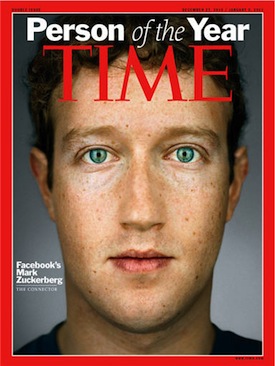
I doubt Mark Zuckerberg was ready for the rocketship growth of Facebook. Or expected to be Time Person of the Year at age 26.

I bet that if you point to any successful entrepreneur, they were not totally prepared for their first venture. I bet Steve Jobs and Woz weren’t prepared when they formed Apple Computer. I bet Larry and Sergey weren’t prepared when Google took off. I bet Mark Zuckerberg wasn’t ready either. Most likely, they just worked on something they cared about, and figured out the rest along the way.

Everyone also has their personal strengths and weaknesses.  And all entrepreneurs are different.  I believe the only important thing is to truly understand yourself.  If you understand and acknowledge your own strengths and weaknesses, you can work with them.  For me, this means accentuating the strengths, working on glaring weaknesses, but most importantly, finding awesome people to work with that cover your weaknesses.

The good part about this entrepreneurship thing, and really life in general, is that you are free to make whatever you want out of it.  There will be supporters, and naysayers. There are things you will naturally excel at, and others that will be difficult. But none of that really matters.  Just go do whatever you care about whether you are prepared or not.

Zero-risk Entrepreneurship

It’s been three weeks since I quit my industry job and ventured out on my own. When I talk to folks about it, I often get a congratulations, followed by this:

“Wow, that takes a lot of courage. I’m not risky, and I could never do that. But, it’s great that you are.”

At first, it sounds nice. Who doesn’t want to believe that they are risky and courageous?

But on second thought, I’m not sure that it’s true.

When I think of courage, I think of people taking risks that involve a real downside. I think of soldiers risking their lives. I think of the firefighters on 9/11. I think of the Harriet Tubmans, the Nelson Mandelas, and the Ghandis.

I do not think of people quitting their job to try their own thing.

As far as I can tell, there is no real downside to giving the entrepreneur career a try. The biggest downside is a temporary lull in cash flow. The closest thing to courage is the willingness to deal with fears we may have related to entrepreneurship. This may only be the case for me, but I have to believe that it extends to many others.

Firefighters at work on 9/11: something much closer to real courage.

The biggest perceived downside: loss of cash flow and savings.

If you are thinking about leaving your job to be an entrepreneur, you are definitely leaving money on the table. This includes a stable salary, future bonuses, vested stock options, etc. You will also bleed from your savings for a while.

Is this really a big loss?

On one hand, yes. It’s definitely a loss of real money. And potentially, a lot of real money. On the other hand, it’s not that much of a loss. As long as you have enough money to sustain your life, and provide yourself some runway, what else do you need?

The problem is that most people look at this loss, and think of financial insecurity. Yes, putting oneself in a place of financial insecurity can be pretty risky. But becoming an entrepreneur does not mean that you are automatically broke, with no means of making money.

I believe there is only one important question for would-be entrepreneurs:

Can you get another comparable job?

If the answer is “yes”, then you are all set. Just get another job before you become financially unstable. My bet, is that your answer is “yes”. First, you have already have a job. Chances are that you can get another. Second, if you are serious about entrepreneurship, you can probably get stuff done. Companies hire people who get stuff done.

And on bleeding from your savings: you probably don’t need as much money as you think. It is quite easy to lower your burn rate. Move in with your parents, or move to an apartment with lower rent. Cook instead of eat out. Make coffee instead of go to Starbucks. It is surprising how much you can lower monthly costs just by making it a priority.

Investing in yourself.

Here is a better way to think about the loss in cash flow.

Many startups, especially in web and mobile, don’t need much for seed funding. Seed-stage incubators/accelerators, such as Y-Combinator and TechStars, give startups about 18K. The 18K is only meant for a few months, but it is enough to get started. It isn’t uncommon for startups to start with seed money in the tens of thousands.

How many folks in the tech industry have more than that in the bank account? Or in various investments? How much money is in their in their 401K plans?

Instead of thinking about the loss in cash flow, think about it as an investment in yourself. If you work hard, the investment will easily pay itself off: if not in startup success, than in skills/experience/network acquired.

Some sort of courage required.

If there is courage in entrepreneurship, it is in recognizing and dealing with the fears built into human psychology.

  1. Fear of change. Psychologist Fritz Riemann postulated a pair of conflicting needs that manifest as the fear of change, and the fear of constancy. Everyone has both of these fears to some degree, but for some, one of these dominates the other. For those where the fear of change dominates, the drastic change in career/lifestyle change involved in becoming an entrepreneur can be scary.
  2. Fear of loss. Kahneman and Tversky found that people do not equally weigh loss and gain. The feeling of loss is much stronger. People would rather not deal with potential losses, leading to risk aversion. This also contributes to the sunk cost fallacy. Once people are invested along one path, they are hesitant about switching paths when it involves losing the currently invested costs. The fear of loss makes it harder to leave your current job, your steady paycheck, and your comfortable lifestyle. As a side note, it also helps makes Farmville addictive.
  3. Fear of uncertainty. Uncertainty can produce discomfort, and psychologists attribute several types of human communication/behavior to reducing uncertainty. Entrepreneurship is all about tolerating and reducing uncertainty.
  4. Another pair of fears: the fear of failure, and the fear of success. The fear of failure is pretty straightforward. What if we are not good enough? What if we give it our, all and still fail? It can be easier to cut our losses, and just not try. The fear of success is related. What if we succeed, but aren’t happy? What if we got lucky, and can’t ever repeat the success? Shooting for success, and then actually reaching our goals, can be scary.

Again, none of these are true problems. They only require the courage to play mind games with ourselves, and deal with the fears that are hardwired into our brains. We need to accept that there will be a large change in our lives, that there will be short-term losses for almost-certain long-term gains, that will will live in a period of uncertainty, and that we will will be alright whether our business succeeds or fails.

Entrepreneurship and skydiving.

People like to make the analogy between entrepreneurship and skydiving. Most emphasize the risk involved in both activities.

I agree with the analogy, but not for the same reason.

Entrepreneurship and skydiving are similar because they are safe activities that are perceived as risky. Similar to entrepreneurship, there is no real downside to skydiving. No one skydives without two parachutes: the main parachute, and a reserve parachute. It is highly unlikely for anyone to die skydiving. What we really deal with is our fears associated with skydiving (e.g. fear of heights). If we can deal with those fears, it’s all good.

I recently went tandem skydiving for the first time at a good friend’s bachelor party (literally taking the plunge before taking the plunge!). The anticipation while waiting on the ground was scary. The flight up was even scarier. We were packed like sardines in a little plane. The side door was open the whole time. The ground kept getting further and further away. I would have been scared jumping out, but was pushed out by the instructor before I could think. After that point, there was no more fear. It didn’t feel like falling because we instantly hit terminal velocity. It was exhilarating for about a minute. Then, the instructor pulled the chute, and I enjoyed the view while safely gliding on down to Earth.

So to those would-be entrepreneurs, there is zero risk. Prepare your chutes, take the plunge, enjoy the exhilaration, and know that you will be safe no matter what the outcome.

Something new…

Last Friday was a big day for me.  I started the day employed as a researcher in the mobile industry.  I ended the day as a first-time entrepreneur (a.k.a. unemployed, but hopeful, bum).

When I joined Qualcomm Research Silicon Valley (QRSV) 19 months ago, the job seemed like a perfect fit.  QRSV was an up-and-coming lab in my research area.  The pay was a huge step up from grad school.  The people were awesome.  The project was intellectually challenging, with the potential for large industry impact.  It was just about everything a fresh PhD could ask for.

That’s great.  So, why leave?

About one year into the job, something started to nag at me.  I couldn’t place it, but something felt wrong.  At first, I convinced myself that I was uncomfortable with industry. Coming from grad school, industry felt like a huge culture shock.  I told myself to stick with it, and hoped that the feeling would pass.

Except, the feeling didn’t pass.  With each day, the feeling grew stronger.  I wish I could say that I understood myself, and quickly figured things out.  Unfortunately, that was not the case.  Initially, days passed, followed by weeks.  Over time, work became less exciting, and I began to dread going to work each morning.

As the feeling grew stronger, it eventually manifested itself as a faint voice in the back of my head:

“This is wrong.  What are you doing with your life?”

What was once a vague feeling, was now a voice with a clear message.  The message itself isn’t anything unique or special.  If I had to bet, a good majority of the human population has heard the same message at some point.  It is the stuff that great mid-life crises are built on.

In any case, it was time to honest with myself.

What am I doing with my life?

I was doing what I was trained for.  I spent many years in school along the same streamlined career path, accumulating B.S., M.S., and Ph.D. degrees in Computer Engineering.  This job was the next logical step.

I was doing something that I could be good at.  I’ve learned over the years that as long as I work hard, I can excel at what I’m working on.  I believe that I did reasonably well.  If you measure by publications in top-tier conferences, I made a meaningful impact through several papers.  If you measure by real-world impact, it remains to be seen.

I was doing something that could be fun.  Research is fun.  Working with brilliant folks at the top of your field is fun.  Writing code, debugging it, and integrating it into a larger project is fun.

As I mentioned above, this is a really good set up, and there really aren’t any complaints. Most people would be happy with the situation.  In fact, I continue to refer my friends to Qualcomm Research because I believe it is a great place to work.

So, what’s wrong with this picture?  It took me a while to answer this, but in hindsight, it’s quite simple.

We only have one life.  We are only young once (and at 32, I’m not that young).  We have a limited time on this Earth, and we better make good use of this time.  Therefore, the most important decisions we make in our lives are related to how we allocate our time.

Furthermore, we spend a majority of our young adult waking lives working.  To some degree, this is a sad realization.  The average work day is supposed to be 8 hours.  Most of the people I know work far more than that.  Thus, on an average work day, people spend more time at work than with their families.  If the most important decisions we make are related to how we allocate our time, and we spend a majority of our young lives working, the choice of what to work on is pretty damn important.

The result from this thinking is straightforward.  Doing what I can is not good enough. Doing what I could be good at is not good enough.  And doing what may be fun is not good enough.  Given the opportunity to work on anything, I need to find what I want to do.

What’s next?

This brings us to the present.  I quit my job to figure out what what I want to do.  There are several ways I could approach this.  One approach could be to find a position within a large company that gives me freedom to explore.  Another approach could be to join a startup that has goal that I vibe with.  Both of these may work, but I am afraid of being constrained by the direction or politics of the organization.  For now, I intend to strike it out on my own, and give myself absolute freedom to find what I want to work on.

Although the future is hazy, I do have a general idea of where I am going.

I have always been interested in the human condition.  If you see me in a book store, you will not find me in the computer aisle.  Instead, you will find me rummaging through books on psychology, self-help, business, and personal development.  I am interested in what makes people tick, and how people live their lives.  I like thinking about how to make my life more awesome.  I like thinking about how to help others live the best lives that they can.

I want to combine my fascination with the human condition, and my interest in computing technology.  How do we design products that change lives?  How can technology help make us better people?  How can technology help create a better society?

I have some thoughts marinating in my head, but they are vague and need a lot of massaging.  I hope that in the near future, they will solidify into something to start building. And then, who knows?  Entrepreneurs love to talk about pivoting, and I’m sure I will do my fair share of that.

The first few days.

After quitting my job, I took the weekend off and explored Point Reyes National Seashore in Marin County.  The hikes are good.  Some of the views are gorgeous.  The oysters grown in Tomales Bay are abolutely delicious.  If you haven’t been, I would suggest spending an afternoon there shucking oysters and washing them down with some good beer or white wine.

Yesterday, I woke up with an amazing sense of freedom.  It feels surreal.  Aside from monetary concerns, there are no limitations.  I don’t use my alarm clock anymore.  I can go for a run anytime I want.  I can spend all day thinking about whatever I want.  I can build whatever I want.

I know it’s only the beginning, and there will be many ups and downs in the near future, but for now, everything is fun and exciting.

Stay tuned.  I will keep you posted with random thoughts on life, and chronicles of my adventures as a first-time entrepreneur.