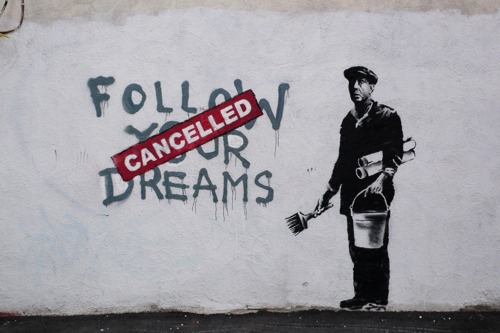
My dreams, deferred

A Dream Deferred

by Langston Hughes

What happens to a dream deferred?

Does it dry up
like a raisin in the sun?
Or fester like a sore–
And then run?
Does it stink like rotten meat?
Or crust and sugar over–
like a syrupy sweet?

Maybe it just sags
like a heavy load.

Or does it explode?

The makings of a dream.

From 2000 to 2011, my dream was to become a professor.

Prior to 2000, I had been a slacker. In high school, I mostly focused on track & field, and in my first few years of college, I played basketball and Starcraft like they were two full time jobs.

It wasn’t until my junior year when I decided it was time to figure out my future.

I was fortunate to be taking a computer architecture course with an awesome professor. For the first time, I became genuinely excited about an undergraduate course. I went to all the lectures, and actually did the homework assignments and labs.

By the end of the course, I thought to myself:

“My professor is cool, and this material is really cool.. why not become a professor?”

That was it. Nothing fancy happened. I just took a course, and decided that I had a new goal in life.

The long journey.

The funny thing is, this ended up defining the next 10 years of my life.

In the last year of undergrad, I began reading research papers, and sat in the graduate-level course of college. I hit a barrier getting funded in early in graduate school, but I ended up learning the most important lesson I have ever learned, working my ass off, and overcoming this barrier. I continued through a PhD program, published in several top-tier conferences, and when time came for graduation in 2010, I was all set to be applying for faculty positions.

I was unfortunate to apply during the recession. The job market was more competitive than usual, and I didn’t get any faculty offers that I was excited about. I then moved out to Silicon Valley, and took a research position at Qualcomm Research.

And then something unexpected happened.

A strange thing happens when you near reaching a dream.

When you are along the path, it can be easy to go heads down and drive forward towards the dream. As you near the end, you know you’ve already made it a great deal of the way there.

You start thinking, is this what I really want? If I achieve this, then what?

As I asked myself these questions, I knew I couldn’t answer them with something I would be happy about. I had set the goal 10+ years ago, and in those 10+ years, I learned enough to get an idea of whether I would actually want the position. The dream wasn’t so shiny any more. I saw the downsides of academia. I imagined jumping on the publishing treadmill for the next 5-10 years and it didn’t sound exciting to me at all.

I had to re-evaluate what I really wanted. And as I searched my soul, it became increasingly clear that a faculty position wasn’t what I wanted… at least not now.

And so I left the dream dangling… unfinished.

Some days, I’m really glad I did my PhD. I know I learned a lot in it, and had a great experience attending various schools, taking part in different internships, and meeting great friends.

Other days, I wish I didn’t do my PhD at all. It wasn’t necessary to join the startup world. But I didn’t have the foresight back then to know this.

Some days I believe that one day I’ll still try to become a professor. In theory, I like the idea of academia. I like the idea of being part of education. I also had my opinions on how academia could education students for entrepreneurship/startups, and it would be great to give it a shot.

Other days, I’m fairly sure I never will want to be a professor. I love my job now. If I could only find a way to make money, I could do it forever.

What happens to a dream deferred?

I have no idea. I suppose only time will tell.

Has something similar happened to you? How has it turned out?

(Photo credit: wave-finder.com)

P.S. This is post number #43 in a 100 day blogging challenge. See you tomorrow!

Follow me on Twitter: @alexshye.

Or, check out my current project Soulmix.

Go big

I’ve already written about how I was a little too focused on publishing during grad school. However, as I focused on publishing, I learned an important lesson about going big.

At the start of grad school, I viewed myself as a newbie. So, I set small goals, and then gradually made them bigger and bigger. My first goal was to get a workshop paper published. The next was to publish a small conference paper. And then, a top-tier conference paper.

One of my biggest realizations were that each paper was a lot of work. The top-tier paper didn’t require much more work than the workshop paper. The main difference was the size of the idea that I was working on. Given X hours to work, I realized I was much better off working on something that could be a top-tier paper.

This extends to much of what we work on in life.

Are you trying to get by? Are you simply working to finish the job? Are you trying to complete small goals? Or are do you see something big in your work? Do you see how you’ll gain leverage, and move towards even greater things?

We all only have 24 hours in a day. We all work hard. Yes, luck and talent are important. But in my opinion, at any particular level of luck+talent+skill, the main differentiating factor is simply how big one thinks.

Since quitting my job, I have apparently forgotten this lesson. That is, until last week.

For the past few months, I’ve been working on Soulmix, which was a social news sharing site on the topic of good living. It was interesting, and there was a steady number of repeat visitors to the site. It seemed like there was some promise, and I was happy about it.

Last week, while I was writing about simplicity and unboundedness in consumer web products, I had an epiphany. The ideas in the blog posts directly applied to my work! I realized that the site I was building could actually be something bigger. There was a larger vision, if only I would let myself see it, and then let myself work towards it. So, I’m shifting things around, and working hard on changing Soulmix to allow it to become something bigger.

It is one thing to write about life and startups. It is another to be taking my own advice at the same time. Fortunately, I am, and I’m super excited to see where things go 🙂

(Photo credit: wave-finder.com)

P.S. This is post number #42 in a 100 day blogging challenge. See you tomorrow!

Follow me on Twitter: @alexshye.

Or, check out my current project Soulmix.

The unbundling of Craigslist and reddit: the flip side

Reddit-Gold-Added-Membership-Benefits

Earlier this year, I wrote on how I believe reddit may be (or is being) unbundled. In the post, I draw similarities to how Craiglist is being unbundled, and provide several examples of startups that are within verticals of reddit.

Of course, where there is an argument, there is also a counter-argument. And in this this case, there is clearly a counter argument.

I’ll kick if off with a great comment left by Christian Puricelli:

Great post! But I think the unbundling of Reddit is more challenging of the unbundling of Craigslist, because there is one fundamental difference: on Reddit there is no financial transaction (I mean between the users). 3 key success factors of platforms are: the network effect, the curation of content, and especially on platforms that involves financial risky transaction the curation of users and trust (see also http://thenextweb.com/insider/2013/05/26/platform-thinking-how-to-disrupt-craigslist/). A horizontal platform like Craigslist is weak on this 3rd point, allowing vertical competitors like Airbnb that can provide the trust for the transaction to grow. For a non transactional platform like Reddit, this trust factor could not be used by competing verticals for a competitive advantage. So the playing field is more even. Of course this does not mean that it’s impossible as the examples you wrote about show, just that it’s a little be more challenging.

Christian hits the nail on the head.

A fundamental difference is that there are monetary transactions within marketplaces. Where there is a transfer of money, there is a cut of that transaction to be made.

Also, because there is a monetary transaction, trust is also important; important enough that is can be a major differentiating factor. Discussion sites could play up trust also. For example, everyone on Quibb uses their real identity. So do many on Inbound and USV’s new front page. It makes a large difference in the quality of discussions (IMHO). But is trust is online discussion as important as the trust between people when money is exchanged? Probably not.

There is also the difference between need and want. People go to Craigslist to spend money on a service/product they often need. They will take the time for search for that thing they need, and then spend hard-earned dollars on it. People go to reddit to chat with people, which is usually a want (and fairly often, just to procrastinate or kill time). There is a big difference here.

Craigslist monetizes fairly easily. reddit is having a tough time.

Billion dollar companies lay within the verticals of Craigslist (i.e., AirBnb).

Do billion dollar companies lay within the verticals of reddit? If I had to guess, the answer would be “no”, but I would love to be proven wrong 🙂

P.S. This is post number #41 in a 100 day blogging challenge. See you tomorrow!

Follow me on Twitter: @alexshye.

Or, check out my current project Soulmix.

How I learned to track my habits

Creating and tracking good habits sounds great, but can be a really difficult thing to do. The most difficult thing for me has simply been remembering. When I want to create a new habit, I often forget to do it. And, when I do it, I often forget to actually track it. Not good.

Lately, I’ve come up with a system that has seemed to work very well.

Here is what works for me.

Plan around the timing.

Remembering to do a new habit can be tough. The easiest way to ensure you do something new is to tie the habit to a particular time in the day.

The problem is that all days are different. Some days you have lots of meetings. Some days you have lots of errands. Some days are for family, and some are for work.

I realized that the two times in the day I have the most control over are (1) right after a wake up, and (2) before I go to bed. I try as hard as I can to tie my new habits to these times.

Simplify the habits.

Don’t make a large list of habits to maintain.

The key is to boil things down to what really matters to you. For me, I want to create lifestyle habits. I never focus on creating new work-related habits. I already work so much that I don’t need to focus on those habits. What I need to focus on is staying healthy in the mind and body.

Currently, I only have 4 habits I track:

  1. Drink more water: I drink lots of coffee, and want to drink more water. I accomplish this by drinking a glass when I wake up and a glass before going to bed.
  2. Yoga or stretching: Working at a computer is hell on your body. After I drink my morning cup of water, I brew a cup of coffee, and do yoga for 10-15 minutes. It is a great way to start the day, and the time right there. Plus, I am rewarded with coffee!
  3. Exercise: This is the random one. I exercise when I can, but this habit gets put off more than the other four. At the very least, hopefully I did some yoga.
  4. Write: I blog every night before I go to bed. My rule is that I can’t sleep until I press publish, and it seems to work.

Simple right? 2 when I wake up, and 1 when I go to bed. I don’t get these done everyday, but keeping it simple has helped me a lot.

Simplify the tracking.

There are tons of different ways to track. You can use notebooks, or different web and mobile apps.

Personally, I’ve been using the Lift app on my iPhone. It is a super simple app that looks beautiful, and does just what I want: it gives me a place to check off my small list of habits. When I’m doing well, it keeps track of my streaks, which provides encouragement.

Building the habits around the habits.

That’s it!

Those are the few things that have helped me be more consistent with drinking water, practicing yoga, exercising, and blogging.

The funny thing is that the habits are OK, and habit tracking apps are OK, but what has really helped me is to build habits around the habits I want. Once I develop the habit of doing things at certain times, and habits fall into the place. As does the habit tracking.

How do you create and track new habits? I’d love to hear your tips and tricks!

P.S. This is post number #40 in a 100 day blogging challenge. See you tomorrow!

Follow me on Twitter: @alexshye.

Or, check out my current project Soulmix.

Life lessons from Ender’s Game (the movie)

I recently got the chance to watch the Ender’s Game move.

I loved the book as a child, and greatly enjoyed seeing the book adapted to the big screen. Still, I left wishing that it spent more time on Battle School. In my opinion, the lessons from Battle School were most interesting parts of the book, and were the funnest to read. They would have been great to see, although they would have stretched the move to 3+ hours (I would have been OK with it though!).

Even with much of Battle School missing, I still found myself noting important life and leadership lessons during the movie.

Here are a few:

*** Warning ***: There will be a few spoilers so if you intend on watching the move, you may want to stop reading.

1) Isolation must never be broken.

Early in Battle School, Ender is constantly singled out on purpose. This isolation is lonely, but is essential for grooming Ender into a leader. The leader isn’t the same as the others. The leader needs to be different, adjust to it. A good way to kickstart this is just to be treated differently.

I immediately thought about the lonely journey as an entrepreneur. As I’ve written on earlier, there is power in being different: the only way you can hope to attain something extraordinary is to break free from the regular. Breaking free is lonely, so maybe it is right that the entrepreneurial journey is lonely. It wouldn’t work any other way.

2) No distraction.

Ender continually tries to email his sister during the early days of Battle School. He doesn’t receive any replies. When he asks Colonel Graff, he is told the email is shut off. There is no space for distraction in Battle School.

Any significant challenge requires focus. Watch the email.. and Facebook.. and other distractions.

3) Allow others to shine.

When Ender begins to be singled out in the classroom, he tells the teacher that two others students would be great at answering the question. He could have answered it, but as the singled-out student already, it serves him no purpose to be a know-it-all. You gain allies and friends by deferring the limelight and allowing others to shine.

4) Let others save face.

When toon leader Bonzo tells Ender that he can’t practice in front of the team, Ender asks to speak to Bonzo in private. He tells Bonzo that he will practice, and that he won’t be stopped. But, he will lay low for the day, and allow Bonzo to give him permission the next day.

When fighting someone, you are still better off if you find a way to get your way without harming them.

5) Don’t just win the battle, win the future battles.

If there is going to be a fight, Ender will literally end you. He doesn’t just win the battle. He fights to win the future battles. It is the best way to avoid future conflicts.

If you have a problem, don’t go for the quick solution. Don’t go for the one-time fix. Get to the core of the thing, and take care of business.

6) Do things your own way.

When Ender becomes leader of the Dragon Army, he immediately tells the troops that the youngest sleep by the door, and the oldest sleep away from it. Usually, the older troops get to sleep by the door. It is Ender’s way to telling them he intends to run his army his way. It isn’t described in detail within the movie, but he also runs the Dragon Army his own way, and is wildly successful for it.

There is always a “regular” way of doing things. Is it really necessary? Think about it, and do things your own way if it seems right.

7) Take the misfits.

Ender’s Dragon Army contains misfits from all of the teams. Historically, the Dragon Army has never won a battle, so when they resurrect this army name for Ender, it seems fitting that it take in the misfits.

Yet Colonel Graff knows that with the right leader, the Dragon Army can be great. The misfits are only misfits because they haven’t found their place on their team. In a different team, with a great leader, the misfits can be great.

8) Love for you enemy.

Early in Battle School, Bernard bullies Ender whenever he can. When Ender gets the Dragon Army, he accepts Bernard as one of the team. As the leader, Ender could have made Bernard’s life more difficult, but he didn’t. Showing your enemies respect can be powerful, especially when you don’t need to show the respect.

Ender is known for loving his enemies. He uses both intelligence and empathy to understand his enemy. With this understanding comes love for the enemy. It also turns out that the best way to crush an enemy is to truly understand them.

9) The importance of family.

Battle School can be brutal. As Ender is continually isolated without email and outside contact, he eventually gets sick of it. When Ender quits Battle School, the first thing he does is see his sister Valentine, who successfully talks him into going back to Battle School.

We aren’t machines. Minimizing distraction is great, but in the end, we really to be around people we care about. Family matters.

10) Play the big game. Try.

As Valentine convinces Ender to go back to Battle School, she says she believes that Ender is afraid of the future. He may be afraid of the unknown enemy. Still, in order to save the humans on Earth, he has to try.

11) You’re never ready.

Before the graduation battle, Mazer Rackham tells Colonel Graff that Ender isn’t ready. And it isn’t a big surprise. Ender isn’t ready. He is young, and is still in training.

Colonel Graff simply replies, “you’re never ready.”

12) The way we win matters. * Big spoiler alert *

Ender wants to win. And when he does, he wants to win on his own terms. He fights to win all future battles, but first seeks to understand.

When he unexpectedly wipes out the buggers at the end, he is overcome with grief. That is not the way he wanted to win. He never got to learn about his enemy before destroying them.

This is one of the big differences between Peter and Ender. Ender cares. He values life, humanity, and whatever you call it for other species.

The book is better.

The movie was enjoyable. Without a doubt, the book is better. If this post was on the book, the list would probably be two times longer.

If you haven’t read the book yet, you should! It is a fun read, and is chock full of lessons on life, leadership, management, and empathy. I also suggest the other two in the series (Speaker for the Dead and Xenophobia), both of which are much more somber in nature, but great in a different way.

P.S. This is post number #39 in a 100 day blogging challenge. Was late on this post, but my Internet went out last night halfway through writing. Should have another post by the end of the day 🙂

Follow me on Twitter: @alexshye.

Or, check out my current project Soulmix.

What’s in an identity?

When I was in high school, I was an athlete.

I was a slacker of a student, but a pretty darn good athlete. Most days, I wore a track suit or sweats to school. I put my energy into track workouts and the weight room. For fun, I hit the basketball courts, tennis courts, or soccer field.

I thought I was an athlete, but I wasn’t.

At the end of college, I decided that I had to do something with my life. I took a computer architecture course which enthralled me, and proceeded to jump into grad school. I went full steam ahead with research and academia, on track to become a professor. In the meantime, I also fell out of shape.

In grad school, I became an academic.

And, I thought I’d be an academic, until I realized that I wasn’t.

Two years ago, I did soul searching and realized that I wanted to get out into the world and build something. I quit my job, and ventured out on my own. Shortly after, I went to my LinkedIn profile, removed ‘Senior Researcher’ and replaced it with ‘Entrepreneur’.

I became an entrepreneur, and remain an entrepreneur to this day.

Except if history repeats itself, the lesson to learn is that I am not an entrepreneur.

What is in these identities? Why do we label ourselves, and label others?

I only know that we aren’t our labels. We are simply what we are thinking, what we are doing, and what we aspire to be at a particular moment. And in the next moment, everything might change.

P.S. This is post number #38 in a 100 day blogging challenge. See you tomorrow!

Follow me on Twitter: @alexshye.

Or, check out my current project Soulmix.

Unboundedness in consumer web products

Recently, I wrote about the importance of simplicity in consumer web design. Most big consumer web apps seem to have only a few concepts at their core. This makes some sense. The simplicity focuses a product, and makes it easy for new users to understand.

Simplicity is great, but what other properties make a great consumer product?

Another interesting property could be the boundedness of the product. Looking through the Alexa Top Sites, many top consumer web products have an unbounded feeling as you use them.

Here are some examples:

  • Google/Baidu/Live/Bing: unbounded search queries
  • Facebook/LinkedIn/Twitter: unbounded potential connections & messages
  • Youtube: unbounded videos to watch
  • Yahoo/QQ: unbounded portal of news
  • Wikipedia: unbounded portal of knowledge
  • Amazon/Taobao/eBay: unbounded marketplace of products and/or reviews
  • Blogger/Wordpress: unbounded content to read
  • Tumblr/Pinterest: unbounded content to explore and repost
  • Instagram/Snapchat: unbounded images to create

Obviously, having a useful/interesting/fun app is first priority. But beyond that, the feeling of unboundedness is very important. It means unbounded future engagement with the product, something any product designer strives for. Combine this will simplicity, you have a killer product: one that is simple to understand but allows for infinite possibilities.

Are you designing a web app?

Here are three good questions to ask yourself:

  1. Do users find your app useful, interesting, and/or fun?
  2. Is the app built around a small set of simple concepts? Even better, is the combinations of simple concepts new?
  3. Do these simple concepts enable unbounded engagement?

If you answer ‘yes’ to all three, you might be in good shape

I’ve love to add to this list. If anyone has any good suggestions, let me know!

P.S. This is post number #37 in a 100 day blogging challenge. See you tomorrow!

Follow me on Twitter @alexshye.

Check out my current project Soulmix.

The personal development stigma

I’m a huge personal development nerd.

My bookshelves are lined with self-help, psychology, leadership, and management books. My favorite conversations involve personal challenges, current issues, and life goals. For the past year, I’ve been trying to work at the intersection of personal development and technology.

Unfortunately, I also feel weird about it.

I’m not particularly proud that I’ve read all my personal development books. It definitely isn’t something that I openly talk about. In general, I get this strange feeling when publicly talking about personal development.

Why is this?

The self help stigma.

There is something uncool about personal development.

If I have to guess, it is because it implies that something is wrong with you.

Bring up your own personal development in company, and you get this strange nod. Internally, they are thinking: why do you need to improve? Is there something wrong with you?

If you bring up personal development with respect to someone else, you risk implying that they aren’t good enough. In general, only close friends talk about the stuff. And even then, not often. (…at least in my personal experience)

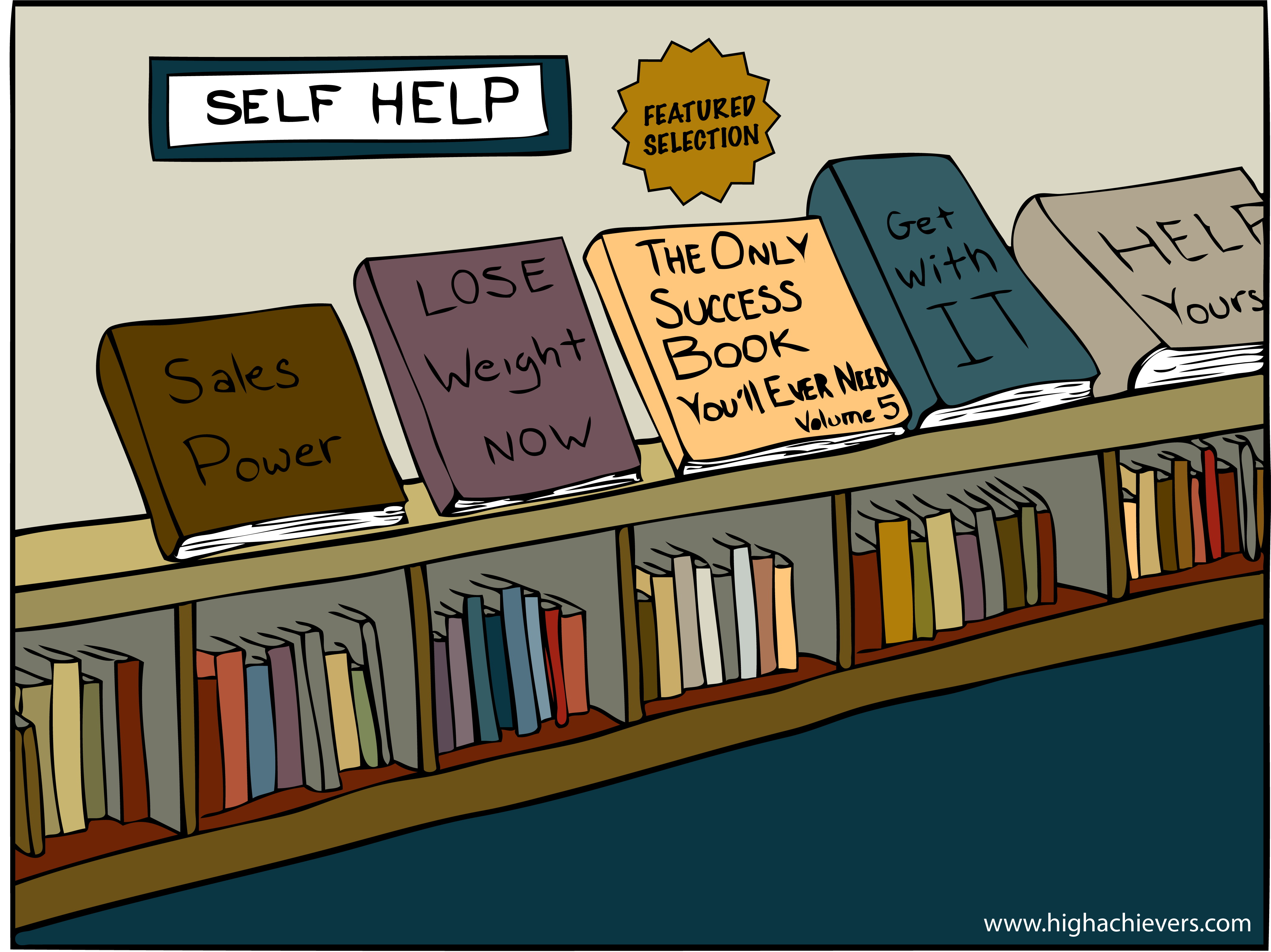
The self-help industry doesn’t help.

In fact, it makes it much much worse.

Walk through the bookstore, or browse any self-help on the Internet, and you’ll come up with ridiculous sounding stuff.

  • 3 steps to get your man back!
  • 30 days to a flat belly!
  • How to think your way to your dreams!
  • 10 steps to that promotion!

Does anyone actually believe it? They must.. people must be buying that stuff right?

Personally, I think it sound cheesy. Not only that, it is wrong.

Unfortunately, the reason this is on the shelves, and all over the Internet, is because it works! The industry has become expert marketers and they know what you want to hear: “What you want amazing results in 2 days? Just buy this book!“.

The industry has optimized to grab your attention and convince you to purchase stuff.

I find this very unfortunate. There is so much good stuff to think about with personal development, and the industry ruins its own public perception in the name of profits.

Your turn.

Do you sometimes feel strange about personal development?

Does the industry itself bug you?

I’d love to hear your thoughts!

P.S. This is post number #36 in a 100 day blogging challenge. See you tomorrow!

Follow me on Twitter @alexshye.

Check out my current project Soulmix.
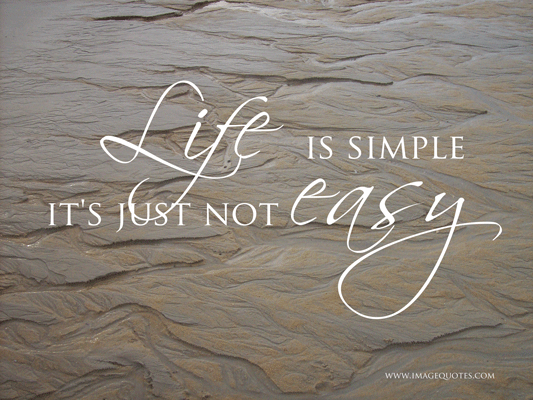
Life is simple

While reflecting on past blog posts related to personal development, I’ve recently come to a conclusion about life: perhaps things are simpler than we think they are.

Yes. Life is relatively simple, and the big decisions are simple to make. They are just hard to carry out. It just happens there is a lot that can make things complicated: emotions, people, relationships, sunk costs, etc.

Here are some examples:

The most important lesson I’ve ever learned? If you want something, just do it.

Want to create a new habit? Commit to it and change your wants to wills.

Want to achieve a goal? Again, commit to it.

Feel different and don’t know what to do? Own it, embrace it, and make it you.

It goes on.

Want to talk to a girl? Just do it. She may reject you, but you can try.

Is your gut telling you to break up with your girlfriend? It is probably right. Just do it.

Does your current career path feel wrong? It probably is. It won’t be easy, but if you work hard at it, you can be effective at something else you enjoy more.

This realization is gives you incredible freedom.

Have a problem?

Stop thinking about all the complexities. At the end of the day, there is a simple answer that is right.

What is the answer? Deep down in your gut, you probably already know.

Just do it.

Have you realized this at all? Do you have your own additions from your experience? I would love to hear about them 🙂

(Photo credit: sidestone.com)

P.S. This is post number #33 in a 100 day blogging challenge. See you tomorrow!

Follow me on Twitter @alexshye.

Do you like to ponder life? You might like Soulmix.

The next generation of academic publishing

books-sidestone.com

(Note: my academia-related posts are strongly colored by my experience studying computer engineering. Other fields will/may differ.)

Since leaving the publication treadmill of academia, I’ve spent a lot of time thinking about academic publishing, and what it could/should be.

The publishing process.

Similar to most large entities, the academic publishing and dissemination process is amazingly slow. Here was the process for me during grad school:

  1. Do research and write up a manuscript (anywhere from 1 month to years)
  2. Submit to a conference
  3. Wait 2-3 months for review
  4. Get a review and write rebuttals
  5. Wait a few weeks
  6. Get an acceptance or rejection. If it is a rejection, wait a few months until the next conferences and go back to step 2.
  7. If the paper is accepted, work on the camera-ready and submit a few weeks later.
  8. Wait another 3 months and then go to the conference. At this point, it is officially published put in print and is published.

The entire process is around 7 months. That is a long time.. and that’s if you are lucky and get an accept the first time around!

Many papers go back to step 2 several times, meaning that it can be years before a piece of research is actually disseminated into the world. The rejections can be fairly random too. I have a friend who got a paper rejected 5 times (or was it more?), and then it won Best Paper at the conference it was accepted to.

In computer science, we are lucky to publish primarily in conferences. Journals are even worse. Best case, the turnaround is often a year or more.

Little to no change in the publication process over time.

Innovation is speeding up. As we continue to build on top of prior work, we find ourselves able to accomplish more with less time.

If it publishing isn’t already a bottleneck, it will be soon. As a sample point, I once published a paper that took one month to gather data and write up, and then 7 more months to publish.

What has been done in the last 5-10 years to speed this up? From what I can tell in computer science, nothing.

The major changes I have seen are that ACM and IEEE will put PDFs up online. And to help speed up dissemination of research, people will sometimes publish PDFs to their websites before the conference with a “To appear in…” before the conference title.

To channel Barack Obama, that is not change I can believe it.

A look at online publishing.

As a comparison, what has gone on in online publishing in the last 10-15 years?

It used to be that you had to rely on a publisher to get something out into the world. With the rise of the Internet, blogging platforms (Blogger, WordPress, etc.) were created which enabled anyone to publish to the web.

What about distribution? Well, email lists have existed for a while. And more recently, the big social networks popped up (Facebook, Twitter, etc.) which are great for connecting, but double as distribution platforms. The more likes or retweets a piece of content got, the further it spread into the web-o-sphere.

What about peer review? Peer review is basically a curation process. Social curation platforms such as Reddit and Digg have worked fairly well. If one isn’t a fan of social curation, personal curation platforms such as Pinterest can also be used.

There have been so many tools created for publishing, distributing, and curating content online. And innovation just keeps on happening.

Why can’t academics leverage any online tools?

One possibility.

If I were running a research group right now, I could imagine publishing and sharing without conferences and publications.

My students would each have a blog. They would use it to (1) publish philosophical thoughts on a research area to engage in online discussion, and (2) publish research findings that they want to share with the research community.

My research group would have a blog. Important posts from my students would get cross-posted to the group blog. In addition, I may write to the group blog.

We would all have Twitter accounts, and share blog posts via tweets. We would follow academics who we were interested in, and retweet posts that we liked. We would engage in short conversations over Twitter, and more meaningful conversations via blog comments or our own blog posts.

Peer review would be done with a curation platform. Similar to how conferences have a program committee, a committee of respected individuals could be in charge of curating a number of high quality posts every month. This could be manual, but could also be automatic. For example, if a certain number of committee members retweet a post, it gets automatically put into a collection of great posts.

The archival journals would be official curated collections of posts, and the citations to specific posts would be URLs.

This is just one way to do it. You could imagine many other ways. It wouldn’t be exactly the same as the current system, but it would serve the same purpose.

Benefits.

The benefits would be near-instant publication and distribution. Academics wouldn’t need to sit around and twiddle their thumbs for an accept or reject. They could immediately publish their thoughts and move on. At the same time, they could engage in near real-time communication and conversation about important research topics.

The result would have to be faster turn-around for research, which would speed up innovation. This sounds like a good for the world.

So, who will do this?

I would, except that I’m not in academia anymore. Maybe one day 🙂

Most people who are jaded with academic publishing have left academia. And that is problem for academia.

Would a current academic dare hop off the publication treadmill and then put their reputation on the line to experiment with creating a new publication treadmill? The problem is that professors and grad students are rated based upon their performance on the existing publication treadmill. It would be extraordinarily risky for a younger academic. If they cared about getting tenure (or graduating if they are grad students), they wouldn’t risk it.

It would have to be an older academic. The problem is that they have made their careers on the existing publication treadmill. Why change it?

So who will get things started?

It will take a brazen academic that respects the pure purpose of academia (to teach and discover knowledge), but does not respect the current incarnation of the academic system. But, what university would hire such a person?

(Photo credit: sidestone.com)

P.S. This is post number #32 in a 100 day blogging challenge. See you tomorrow!

Follow me on Twitter @alexshye.

Check out my current project: Soulmix.