Don’t just masturbate

Masturbation is healthy and normal. And it can be good.. to a point. But, no matter what you do, or how often you do it, it isn’t the real deal. At some point, you’ve got to just do it.

Yes, I mean sex. But not just sex.

I’m a personal development nerd. It provides great food for thought, and it feeds my soul. But only to a point. Without action, the thought is worthless. It is simply emotional masturbation.

I used to be an academic, and let me tell you, it is can be an awesome life. You live in a world of novelties and possibilities. You publish your ideas and travel to talk about them. However, these are only ideas and words. When they don’t touch the real world, they become relatively useless. Instead, they become a form of intellectual masturbation.

I’m now an entrepreneur. I write on this blog. I read many other blogs, the new USV, Quibb, and Hacker News. I meet interesting folk. Through all of these things, I’m exposed to many interesting ideas/thoughts, and I learn a lot. But it isn’t enough. I need to get shit done. I need to hack, work on product, figure out what works and what doesn’t, work on what may become a future team, and pivot on the idea when necessary. And at some point, it needs to touch the real world. Without this, everything else that I do doesn’t matter. It purely entrepreneurial masturbation.

There are many form of masturbation. We all do them.

As mentioned above, masturbation can be healthy and good. Just don’t overdo it. At some point, you need to translate the thoughts and ideas into real-world action. That is where real satisfaction is.

P.S. This is post number #58 in a 100 day blogging challenge. See you tomorrow!

Follow me on Twitter @alexshye.

Or, check out my current project Soulmix.

What kind of CEO do you want to be?

ceo

Most groups of organized people have a chief executive officer (CEO). Even if there isn’t anyone with the title of CEO, there is usually someone acting as the CEO.

The CEO’s job is to be the chief leader and decision maker. The CEO is directly responsible for the whole organization. These responsibilities include:

  • Determine core company values, and personify these values
  • Create the company culture
  • Set the purpose and meaning of the organization
  • Set short and long term goals
  • Evaluate progress
  • Re-evaluate core values, goals, etc.
  • Make the tough decisions
  • Communicate clearly, internally and externally
  • Watch the finances and budget
  • …and more!

This is one heck of a demanding position. But it is very important. A good CEO can make a company, and a bad CEO can easily break a company.

Most people will never be the CEO of a Fortune 500 company. Most will never be the CEO of any company, large or small.

Does this mean can write off having any CEO responsibilities?

Nope.

You are still the CEO of a one-man organization: yourself. No one will do this job for you, and no one can do this job for you.

So how are you going to run your life?

  • What are your core values?
  • Do you personify these values?
  • What are you short and long term goals?
  • What do you intend to do with your life?
  • How will you know you are on the right track?
  • How will you re-evaluate your values?
  • How will you re-evaluate your goals?
  • How are you managing your relationships?
  • How are you managing your money?

A good CEO can make a company, and a bad CEO can easily break a company.

What kind of CEO do you want to be?

P.S. This is post number #57 in a 100 day blogging challenge. See you tomorrow!

P.P.S. This post is kind of a cheat post. It is from an old blog that never got off the ground and I deleted. But I like this post and am giving it a new place to live on the web.

Follow me on Twitter @alexshye.

Or, check out my current project Soulmix.

The ugliness of mankind

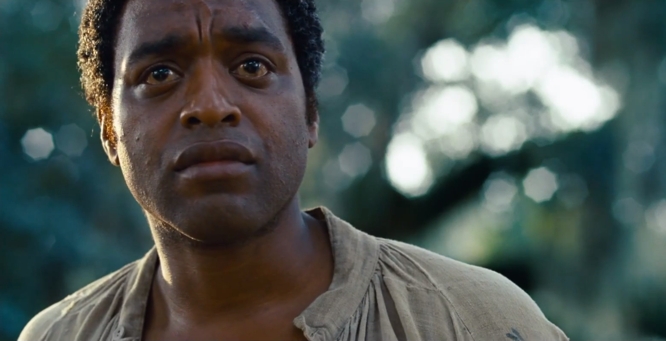
Last night, I watched 21 Years as a Slave. It follows the true story of Solomon Northup, a free black man who is kidnapped and then subjected to 12 year of slavery.

There was nothing enjoyable about the movie. It was violent. It was brutal. Through the whippings, the beatings, and rape scenes, it was flat-out painful to watch. Up until last night, I had never winced through an entire movie.

Several times during the movie, I found myself in tears. I left the theatre with an incredible sadness, and fell asleep with this heaviness in my heart.

How could these things have happened? How could one human subject another human to such pain and misery?

The movie is full of unspeakable acts. Yet, it is all true. That was the worst part about the movie. Nothing was hypothetical. Everything in the movie has happened in real life. In fact, it was probably much worse in real life.

But that isn’t all.

What is even worse is that this ugliness isn’t limited to the past. It exists today. Racism is alive and well. I have visited small towns in the U.S. and have heard the N-word used regularly. I have a friend from north Michigan who explained that they still held KKK rallies in the town courthouse. Even in California, which is relatively progressive, I can still look out in everyday life and still see vestiges of our history with racism.

And it the hate isn’t limited to race. People look down on the homeless. Or they hate on the rich. Or, they hate on those who are drastically different. These days, it seems to be the gay, lesbians, and transgendered. Past hate, there is pure evil (IMHO). The clearest example I know of is human trafficking.

Left to our own devices, there is an ugliness within mankind. It is fucking crazy, and it is not acceptable. The only hope is that as time goes by, we seem to figure some of these things out as a society. At the very least, racism is now illegal. Woman have equal rights. Of course, these changes are only by law. What really matters is within the hearts and minds of humans. Still, we make progress. We make progress, but much much too slowly. The fact that gay rights is even an issue these days is ridiculous.

I wish there was something I could do to work towards eradicating the ugliness. Maybe one day I’ll come up with something. For now, I only know how to try living to the best of my abilities. And, of course, write about it.

P.S. This is post number #51 in a 100 day blogging challenge. See you tomorrow!

Follow me on Twitter @alexshye.

Or, check out my current project: Soulmix.

The actual School of Life, and two awesome videos

I’ve spent a great deal of time in my life pondering how we as a society can teach ourselves to live better lives. Recently, I wrote a blog post about this, and how we need some sort of school for life.

Well, it turns out that it already exists. In 2008, Alain de Botton and Sophie Howarth began The School for Life, a social enterprise in London. What they are doing blows me away. It is still relatively new, and relatively small, but I hope it becomes a movement that spreads.

With that, I’ll leave you with two awesome videos that I stumbled across yesterday by Alain de Botton. If you haven’t seen them, and have the time, give them a watch. The first is on redefining success, and the second is on how atheists really could learn a lot from religions. I could try to explain them more, but wouldn’t do them justice. Alain does such a great job, that I’ll let him take it away.

P.S. This is post number #48 in a 100 day blogging challenge. See you tomorrow!

Follow me on Twitter @alexshye.

Or, check out my current project: Soulmix.

Entrepreneurship and life

When I first created this blog 18 months ago, I randomly named it “On startups and life”. Turns out that although it sounds like two topics, I’ve started to find that they often blend together.

Startups/entrepreneurship is a great analogy for life. In general, we often define life by the challenges that we face. Hopefully, we face them head on, and figure out how to overcome them. When we don’t, we learn a lot, and strengthen ourselves for the next challenge.

Entrepreneurship and startups are the same way; especially early on. No matter what any early entrepreneur tells you (and possibly older ones also), they don’t know what the hell they are doing. If they did, they would succeed much faster, and with much more predictability than they are right now. Instead, we face our challenges head on and hope to tackle them. When we don’t, we learn a lot, and then hope that we have enough in the tank to keep moving on. Sometimes it means money. Sometimes it means emotional will and strength.

In the end, what matters is figuring out how to create an entity that has some kind of value in the world.

With life, the question is how do I create myself as a person of value? In entrepreneurship, it is how do I create something of value? The questions are almost one and the same. And so it helps me make sense of the blog.

As I think about (and write about) life and startups, I’m really just writing about life.

P.S. This is post number #44 in a 100 day blogging challenge. See you tomorrow!

Follow me on Twitter @alexshye.

Check out my current project Soulmix.

My dreams, deferred

A Dream Deferred

by Langston Hughes

What happens to a dream deferred?

Does it dry up
like a raisin in the sun?
Or fester like a sore–
And then run?
Does it stink like rotten meat?
Or crust and sugar over–
like a syrupy sweet?

Maybe it just sags
like a heavy load.

Or does it explode?

The makings of a dream.

From 2000 to 2011, my dream was to become a professor.

Prior to 2000, I had been a slacker. In high school, I mostly focused on track & field, and in my first few years of college, I played basketball and Starcraft like they were two full time jobs.

It wasn’t until my junior year when I decided it was time to figure out my future.

I was fortunate to be taking a computer architecture course with an awesome professor. For the first time, I became genuinely excited about an undergraduate course. I went to all the lectures, and actually did the homework assignments and labs.

By the end of the course, I thought to myself:

“My professor is cool, and this material is really cool.. why not become a professor?”

That was it. Nothing fancy happened. I just took a course, and decided that I had a new goal in life.

The long journey.

The funny thing is, this ended up defining the next 10 years of my life.

In the last year of undergrad, I began reading research papers, and sat in the graduate-level course of college. I hit a barrier getting funded in early in graduate school, but I ended up learning the most important lesson I have ever learned, working my ass off, and overcoming this barrier. I continued through a PhD program, published in several top-tier conferences, and when time came for graduation in 2010, I was all set to be applying for faculty positions.

I was unfortunate to apply during the recession. The job market was more competitive than usual, and I didn’t get any faculty offers that I was excited about. I then moved out to Silicon Valley, and took a research position at Qualcomm Research.

And then something unexpected happened.

A strange thing happens when you near reaching a dream.

When you are along the path, it can be easy to go heads down and drive forward towards the dream. As you near the end, you know you’ve already made it a great deal of the way there.

You start thinking, is this what I really want? If I achieve this, then what?

As I asked myself these questions, I knew I couldn’t answer them with something I would be happy about. I had set the goal 10+ years ago, and in those 10+ years, I learned enough to get an idea of whether I would actually want the position. The dream wasn’t so shiny any more. I saw the downsides of academia. I imagined jumping on the publishing treadmill for the next 5-10 years and it didn’t sound exciting to me at all.

I had to re-evaluate what I really wanted. And as I searched my soul, it became increasingly clear that a faculty position wasn’t what I wanted… at least not now.

And so I left the dream dangling… unfinished.

Some days, I’m really glad I did my PhD. I know I learned a lot in it, and had a great experience attending various schools, taking part in different internships, and meeting great friends.

Other days, I wish I didn’t do my PhD at all. It wasn’t necessary to join the startup world. But I didn’t have the foresight back then to know this.

Some days I believe that one day I’ll still try to become a professor. In theory, I like the idea of academia. I like the idea of being part of education. I also had my opinions on how academia could education students for entrepreneurship/startups, and it would be great to give it a shot.

Other days, I’m fairly sure I never will want to be a professor. I love my job now. If I could only find a way to make money, I could do it forever.

What happens to a dream deferred?

I have no idea. I suppose only time will tell.

Has something similar happened to you? How has it turned out?

(Photo credit: wave-finder.com)

P.S. This is post number #43 in a 100 day blogging challenge. See you tomorrow!

Follow me on Twitter: @alexshye.

Or, check out my current project Soulmix.

Go big

I’ve already written about how I was a little too focused on publishing during grad school. However, as I focused on publishing, I learned an important lesson about going big.

At the start of grad school, I viewed myself as a newbie. So, I set small goals, and then gradually made them bigger and bigger. My first goal was to get a workshop paper published. The next was to publish a small conference paper. And then, a top-tier conference paper.

One of my biggest realizations were that each paper was a lot of work. The top-tier paper didn’t require much more work than the workshop paper. The main difference was the size of the idea that I was working on. Given X hours to work, I realized I was much better off working on something that could be a top-tier paper.

This extends to much of what we work on in life.

Are you trying to get by? Are you simply working to finish the job? Are you trying to complete small goals? Or are do you see something big in your work? Do you see how you’ll gain leverage, and move towards even greater things?

We all only have 24 hours in a day. We all work hard. Yes, luck and talent are important. But in my opinion, at any particular level of luck+talent+skill, the main differentiating factor is simply how big one thinks.

Since quitting my job, I have apparently forgotten this lesson. That is, until last week.

For the past few months, I’ve been working on Soulmix, which was a social news sharing site on the topic of good living. It was interesting, and there was a steady number of repeat visitors to the site. It seemed like there was some promise, and I was happy about it.

Last week, while I was writing about simplicity and unboundedness in consumer web products, I had an epiphany. The ideas in the blog posts directly applied to my work! I realized that the site I was building could actually be something bigger. There was a larger vision, if only I would let myself see it, and then let myself work towards it. So, I’m shifting things around, and working hard on changing Soulmix to allow it to become something bigger.

It is one thing to write about life and startups. It is another to be taking my own advice at the same time. Fortunately, I am, and I’m super excited to see where things go 🙂

(Photo credit: wave-finder.com)

P.S. This is post number #42 in a 100 day blogging challenge. See you tomorrow!

Follow me on Twitter: @alexshye.

Or, check out my current project Soulmix.

How I learned to track my habits

Creating and tracking good habits sounds great, but can be a really difficult thing to do. The most difficult thing for me has simply been remembering. When I want to create a new habit, I often forget to do it. And, when I do it, I often forget to actually track it. Not good.

Lately, I’ve come up with a system that has seemed to work very well.

Here is what works for me.

Plan around the timing.

Remembering to do a new habit can be tough. The easiest way to ensure you do something new is to tie the habit to a particular time in the day.

The problem is that all days are different. Some days you have lots of meetings. Some days you have lots of errands. Some days are for family, and some are for work.

I realized that the two times in the day I have the most control over are (1) right after a wake up, and (2) before I go to bed. I try as hard as I can to tie my new habits to these times.

Simplify the habits.

Don’t make a large list of habits to maintain.

The key is to boil things down to what really matters to you. For me, I want to create lifestyle habits. I never focus on creating new work-related habits. I already work so much that I don’t need to focus on those habits. What I need to focus on is staying healthy in the mind and body.

Currently, I only have 4 habits I track:

  1. Drink more water: I drink lots of coffee, and want to drink more water. I accomplish this by drinking a glass when I wake up and a glass before going to bed.
  2. Yoga or stretching: Working at a computer is hell on your body. After I drink my morning cup of water, I brew a cup of coffee, and do yoga for 10-15 minutes. It is a great way to start the day, and the time right there. Plus, I am rewarded with coffee!
  3. Exercise: This is the random one. I exercise when I can, but this habit gets put off more than the other four. At the very least, hopefully I did some yoga.
  4. Write: I blog every night before I go to bed. My rule is that I can’t sleep until I press publish, and it seems to work.

Simple right? 2 when I wake up, and 1 when I go to bed. I don’t get these done everyday, but keeping it simple has helped me a lot.

Simplify the tracking.

There are tons of different ways to track. You can use notebooks, or different web and mobile apps.

Personally, I’ve been using the Lift app on my iPhone. It is a super simple app that looks beautiful, and does just what I want: it gives me a place to check off my small list of habits. When I’m doing well, it keeps track of my streaks, which provides encouragement.

Building the habits around the habits.

That’s it!

Those are the few things that have helped me be more consistent with drinking water, practicing yoga, exercising, and blogging.

The funny thing is that the habits are OK, and habit tracking apps are OK, but what has really helped me is to build habits around the habits I want. Once I develop the habit of doing things at certain times, and habits fall into the place. As does the habit tracking.

How do you create and track new habits? I’d love to hear your tips and tricks!

P.S. This is post number #40 in a 100 day blogging challenge. See you tomorrow!

Follow me on Twitter: @alexshye.

Or, check out my current project Soulmix.

Life lessons from Ender’s Game (the movie)

I recently got the chance to watch the Ender’s Game move.

I loved the book as a child, and greatly enjoyed seeing the book adapted to the big screen. Still, I left wishing that it spent more time on Battle School. In my opinion, the lessons from Battle School were most interesting parts of the book, and were the funnest to read. They would have been great to see, although they would have stretched the move to 3+ hours (I would have been OK with it though!).

Even with much of Battle School missing, I still found myself noting important life and leadership lessons during the movie.

Here are a few:

*** Warning ***: There will be a few spoilers so if you intend on watching the move, you may want to stop reading.

1) Isolation must never be broken.

Early in Battle School, Ender is constantly singled out on purpose. This isolation is lonely, but is essential for grooming Ender into a leader. The leader isn’t the same as the others. The leader needs to be different, adjust to it. A good way to kickstart this is just to be treated differently.

I immediately thought about the lonely journey as an entrepreneur. As I’ve written on earlier, there is power in being different: the only way you can hope to attain something extraordinary is to break free from the regular. Breaking free is lonely, so maybe it is right that the entrepreneurial journey is lonely. It wouldn’t work any other way.

2) No distraction.

Ender continually tries to email his sister during the early days of Battle School. He doesn’t receive any replies. When he asks Colonel Graff, he is told the email is shut off. There is no space for distraction in Battle School.

Any significant challenge requires focus. Watch the email.. and Facebook.. and other distractions.

3) Allow others to shine.

When Ender begins to be singled out in the classroom, he tells the teacher that two others students would be great at answering the question. He could have answered it, but as the singled-out student already, it serves him no purpose to be a know-it-all. You gain allies and friends by deferring the limelight and allowing others to shine.

4) Let others save face.

When toon leader Bonzo tells Ender that he can’t practice in front of the team, Ender asks to speak to Bonzo in private. He tells Bonzo that he will practice, and that he won’t be stopped. But, he will lay low for the day, and allow Bonzo to give him permission the next day.

When fighting someone, you are still better off if you find a way to get your way without harming them.

5) Don’t just win the battle, win the future battles.

If there is going to be a fight, Ender will literally end you. He doesn’t just win the battle. He fights to win the future battles. It is the best way to avoid future conflicts.

If you have a problem, don’t go for the quick solution. Don’t go for the one-time fix. Get to the core of the thing, and take care of business.

6) Do things your own way.

When Ender becomes leader of the Dragon Army, he immediately tells the troops that the youngest sleep by the door, and the oldest sleep away from it. Usually, the older troops get to sleep by the door. It is Ender’s way to telling them he intends to run his army his way. It isn’t described in detail within the movie, but he also runs the Dragon Army his own way, and is wildly successful for it.

There is always a “regular” way of doing things. Is it really necessary? Think about it, and do things your own way if it seems right.

7) Take the misfits.

Ender’s Dragon Army contains misfits from all of the teams. Historically, the Dragon Army has never won a battle, so when they resurrect this army name for Ender, it seems fitting that it take in the misfits.

Yet Colonel Graff knows that with the right leader, the Dragon Army can be great. The misfits are only misfits because they haven’t found their place on their team. In a different team, with a great leader, the misfits can be great.

8) Love for you enemy.

Early in Battle School, Bernard bullies Ender whenever he can. When Ender gets the Dragon Army, he accepts Bernard as one of the team. As the leader, Ender could have made Bernard’s life more difficult, but he didn’t. Showing your enemies respect can be powerful, especially when you don’t need to show the respect.

Ender is known for loving his enemies. He uses both intelligence and empathy to understand his enemy. With this understanding comes love for the enemy. It also turns out that the best way to crush an enemy is to truly understand them.

9) The importance of family.

Battle School can be brutal. As Ender is continually isolated without email and outside contact, he eventually gets sick of it. When Ender quits Battle School, the first thing he does is see his sister Valentine, who successfully talks him into going back to Battle School.

We aren’t machines. Minimizing distraction is great, but in the end, we really to be around people we care about. Family matters.

10) Play the big game. Try.

As Valentine convinces Ender to go back to Battle School, she says she believes that Ender is afraid of the future. He may be afraid of the unknown enemy. Still, in order to save the humans on Earth, he has to try.

11) You’re never ready.

Before the graduation battle, Mazer Rackham tells Colonel Graff that Ender isn’t ready. And it isn’t a big surprise. Ender isn’t ready. He is young, and is still in training.

Colonel Graff simply replies, “you’re never ready.”

12) The way we win matters. * Big spoiler alert *

Ender wants to win. And when he does, he wants to win on his own terms. He fights to win all future battles, but first seeks to understand.

When he unexpectedly wipes out the buggers at the end, he is overcome with grief. That is not the way he wanted to win. He never got to learn about his enemy before destroying them.

This is one of the big differences between Peter and Ender. Ender cares. He values life, humanity, and whatever you call it for other species.

The book is better.

The movie was enjoyable. Without a doubt, the book is better. If this post was on the book, the list would probably be two times longer.

If you haven’t read the book yet, you should! It is a fun read, and is chock full of lessons on life, leadership, management, and empathy. I also suggest the other two in the series (Speaker for the Dead and Xenophobia), both of which are much more somber in nature, but great in a different way.

P.S. This is post number #39 in a 100 day blogging challenge. Was late on this post, but my Internet went out last night halfway through writing. Should have another post by the end of the day 🙂

Follow me on Twitter: @alexshye.

Or, check out my current project Soulmix.

What’s in an identity?

When I was in high school, I was an athlete.

I was a slacker of a student, but a pretty darn good athlete. Most days, I wore a track suit or sweats to school. I put my energy into track workouts and the weight room. For fun, I hit the basketball courts, tennis courts, or soccer field.

I thought I was an athlete, but I wasn’t.

At the end of college, I decided that I had to do something with my life. I took a computer architecture course which enthralled me, and proceeded to jump into grad school. I went full steam ahead with research and academia, on track to become a professor. In the meantime, I also fell out of shape.

In grad school, I became an academic.

And, I thought I’d be an academic, until I realized that I wasn’t.

Two years ago, I did soul searching and realized that I wanted to get out into the world and build something. I quit my job, and ventured out on my own. Shortly after, I went to my LinkedIn profile, removed ‘Senior Researcher’ and replaced it with ‘Entrepreneur’.

I became an entrepreneur, and remain an entrepreneur to this day.

Except if history repeats itself, the lesson to learn is that I am not an entrepreneur.

What is in these identities? Why do we label ourselves, and label others?

I only know that we aren’t our labels. We are simply what we are thinking, what we are doing, and what we aspire to be at a particular moment. And in the next moment, everything might change.

P.S. This is post number #38 in a 100 day blogging challenge. See you tomorrow!

Follow me on Twitter: @alexshye.

Or, check out my current project Soulmix.